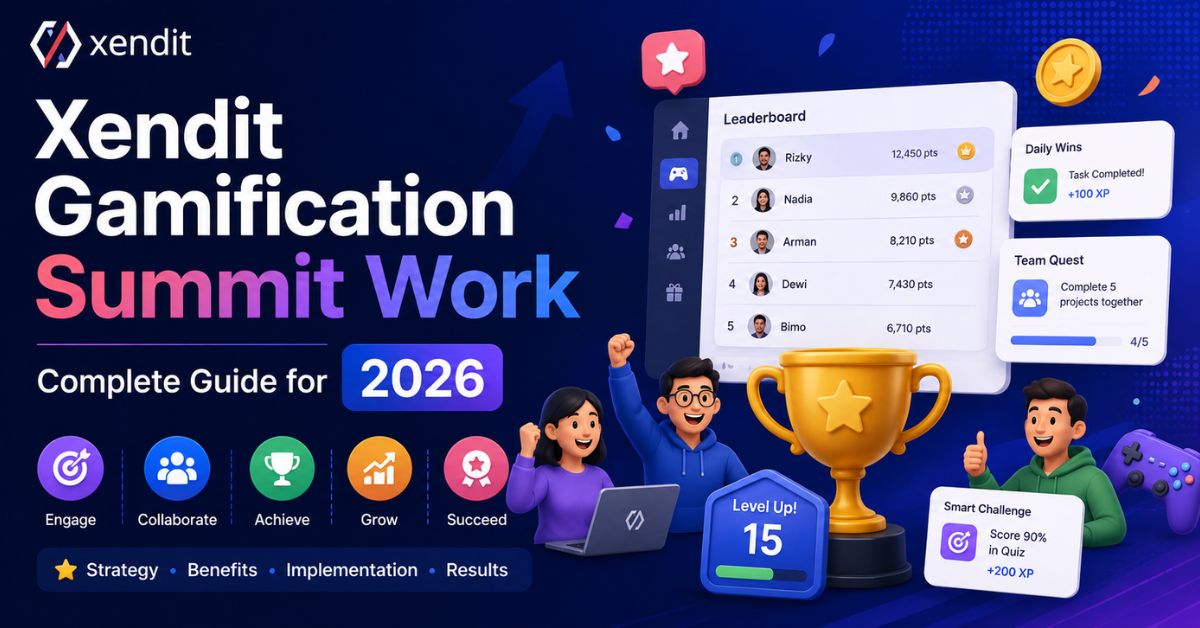
Xendit Gamification Summit Work: Complete Guide for 2026
Work has changed. People log in from home, from a shared office, or from three time zones away. That freedom feels great, but it’s also made employee engagement harder to build and easier to lose. This guide breaks down workplace gamification in plain English: what it is, why it works, how to build it, and what to watch out for.
If you’ve ever wondered whether turning parts of your job into small challenges and rewards actually helps, you’re in the right place. Let’s dig in.
What Is Workplace Gamification?
Workplace gamification means adding game-like elements to everyday work. Think points, badges, progress bars, and small challenges. It’s not about turning your job into a video game. It’s about giving people a clear, visible way to see their own progress.
At its core, a good gamification strategy blends an employee recognition system with performance tracking and a handful of light game mechanics. You still do the same job. But now you can see wins, track growth, and feel your effort actually register. That visibility builds workplace morale one small moment at a time.
| Old Approach | Gamified Approach |
| Annual bonus | Frequent, small rewards |
| Manager-only feedback | Peer and team recognition |
| Static goals | Adaptive, role-based challenges |
| End-of-year review | Real-time progress tracking |
Why Companies Are Introducing Workplace Gamification
For decades, companies leaned on the same playbook: yearly reviews, a survey nobody reread, maybe a holiday party. That worked fine when everyone sat in the same building and bumped into each other by the coffee machine. It doesn’t work as well now.
Today’s hybrid work and remote teams talk through chat messages and video calls instead of hallway conversations. Tasks still get finished. Projects still ship. But something quieter fades: the sense of belonging. Employees can do great work while slowly losing touch with the bigger mission, and that quietly eats away at employee satisfaction long before it shows up in any report. Companies need an engagement strategy that fits how people actually work now, not how they worked ten years ago.
How to Design a Gamification Framework
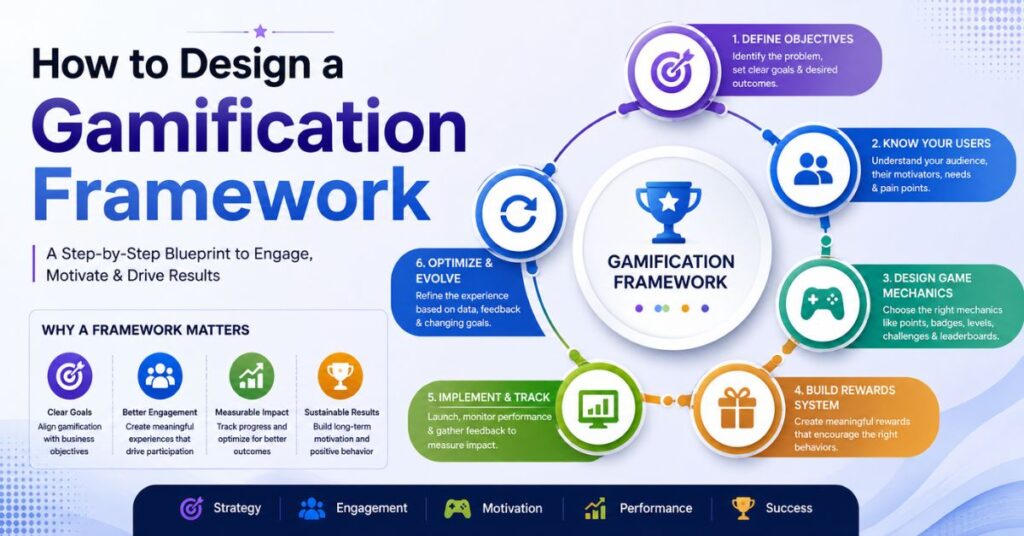
A solid gamification framework doesn’t scream for attention. It fades into the background of daily work instead of distracting from it. Every feature should tie back to something real: a task, a skill, a shared goal. Nothing exists just to look flashy, and that restraint is exactly what keeps a gamified workplace from turning into a gimmick.
Good frameworks lean on behavioral data and small, well-timed nudges rather than constant noise. Four pillars tend to hold the whole thing together, and each one plays a different role in keeping people engaged without wearing them out.
Daily Wins and Progress Tracking
Daily wins are quick, visible markers of progress. Finish a task. Help a teammate. Hit a deadline early. Each one counts, and each one builds momentum fast. Nobody has to wait months to feel like their work matters, because the win shows up the same day it happens.
Collaborative Quests and Team Activities
Collaborative activities push people to work across teams instead of staying in their own lane. A quest might connect two departments around one shared goal. This builds real team collaboration, the kind that rarely happens by accident in a busy company.
Smart Challenges and Meaningful Rewards
Smart challenges use AI personalization to match tasks to a person’s role and skill level. Nobody gets a generic checklist. Everyone gets something that actually fits where they are right now. Pair that with meaningful rewards tied to real contribution, and the whole system feels earned instead of random.
Read More: Droven io Cloud Computing Guide: Features, Benefits & Setup 2026
Progression Systems and Employee Recognition
A progression system shows growth over time through levels or milestones. It’s less about beating a coworker and more about beating your own last month. Xendit Gamification Summit Work That one shift keeps the entire program feeling fair, and it feeds directly into a stronger recognition culture.
How Gamification Works for Employee Engagement
The goal isn’t shinier badges. It’s connection. Good programs lean on principles from behavioral science to tap into intrinsic motivation, Xendit Gamification Summit Work the kind of drive that comes from inside a person rather than from a paycheck alone. When employees see their own growth clearly, they tend to push a little further on their own.
This matters because employee behavior shifts when recognition feels timely and specific. A generic “nice work” means almost nothing. A specific nod to a real contribution means a lot. That’s the whole philosophy behind a strong engagement strategy: reward what’s real, and do it often.
Employee Motivation and Participation
Employee motivation rarely comes from one big reward at the end of the year. It comes from noticing steady progress. When people see their effort reflected back to them regularly, employee productivity tends to follow naturally, without anyone standing over their shoulder.
Xendit Gamification Summit Work Collaboration vs. Workplace Competition
Healthy competition can sharpen focus, but it has limits. Too much rivalry turns motivation into stress fast. Most well-run programs lean toward collaboration activities over head-to-head competition, because shared goals build trust while heavy rivalry often burns people out.
Continuous Learning and Skill Development
Continuous learning keeps a workforce sharp, especially in industries that change quickly. Xendit Gamification Summit Work Built-in learning nudges, tied to a gamified learning approach, support skill growth without adding extra pressure on top of someone’s regular workload.
Technology Behind the Gamification Experience
None of this works without solid workplace technology underneath it. A good system runs on a real-time analytics dashboard that shows progress instantly, instead of making people wait for a quarterly review to learn how they’re doing.
Intelligent automation and data-driven decisions sit quietly behind the scenes, adjusting what each person sees based on their actual work. This is where technology earns its place, not by replacing human judgment, but by giving managers better information to act on sooner.
AI Personalization
AI personalization looks at what someone actually does day to day, not just their job title, and recommends challenges from there. Two people in the same role might see slightly different suggestions, because their work patterns aren’t identical.
Analytics and Engagement Dashboards
Engagement analytics turn raw activity into a clear picture. Leaders can spot a dip in participation early, before it turns into a bigger morale problem across the team.
Read More: Selena Green Vargas: Viral Mystery, Biography & What Happened in 2026
Progress Tracking and Performance Data
Nobody has to guess where they stand. Progress tracking shows milestones on one screen, updated in real time, which removes a lot of the guesswork that used to come with annual reviews.
Workplace Gamification Implementation Strategy
Rolling out a company-wide program all at once rarely goes well. A slower, deliberate implementation strategy builds trust instead of resistance, and it gives leadership room to fix problems while they’re still small.
Each stage should build on the one before it. Xendit Gamification Summit Work Skipping steps, especially the pilot phase, tends to backfire once the whole company is watching.
| Stage | Goal |
| Planning | Define what success actually looks like |
| Pilot program | Test with a small group first |
| Company-wide rollout | Expand department by department |
| Continuous optimization | Keep refining based on real feedback |
Planning and Goal Setting
Everything starts with clear business objectives. Without them, even the most creative framework drifts and loses focus within a few months.
Pilot Program and Employee Testing
A small test group surfaces real problems before they spread. This step protects trust across the wider organization and gives early adopters a voice in shaping the final version.
Company-Wide Launch
Once the pilot proves itself, the rollout can expand. Managers should join in alongside employees, not just monitor from the sidelines, since that involvement strengthens organizational culture from day one.
Continuous Optimization and Feedback
The system never really finishes. It keeps adjusting as employee feedback comes in, which supports steady, long-term improvement instead of a one-and-done launch.
Benefits of Workplace Gamification
The benefits stretch across every level of a company, not just the people doing the daily work. Each group tends to get something a little different out of the system, and that spread is part of why the approach holds up over time.
Benefits for Employees
Employees gain visible progress, steady employee recognition, and real support for career growth. That combination tends to lift employee satisfaction more than an annual bonus ever could on its own.
Benefits for Managers and Teams
Managers get a clearer read on team morale, backed by performance metrics instead of guesswork. That data helps them step in earlier when someone’s engagement starts to slip.
Benefits for Organizations
Organizations see stronger workplace culture, better team productivity, and improved business outcomes over the long run. None of this happens overnight, but the compounding effect is real.
Read More: TheLaptopAdviser Expert Gaming Reviews 2026: Are Their Ratings Accurate and Trustworthy?
How Gamification Can Improve Productivity and Motivation
Motivation rarely comes from a single big reward. It comes from noticing steady progress, week after week. When employees can see their own momentum building, employee productivity tends to rise on its own, without managers needing to push as hard.
This effect also shows up at the team level. When one person’s win becomes visible to the group, it often nudges others to keep pace too, not out of pressure, but out of shared energy. That’s the quiet power behind well-designed workplace rewards systems.
Can Workplace Gamification Help Reduce Employee Burnout?
Burnout rarely hits all at once. It builds slowly, usually from feeling invisible or overwhelmed for months. Steady, small recognition works against that pattern directly, giving people proof that their work gets seen long before frustration has a chance to build up.
This kind of approach supports burnout prevention by encouraging genuine workplace wellness instead of rewarding raw hours logged. Staff motivation tends to rise when people feel supported day to day, not just evaluated once a year during a formal review.
How to Measure the Success of Workplace Gamification
None of this matters if nobody measures it. Real business outcomes come from tracking the right numbers, not just counting how many badges got handed out last quarter. A handful of core gamification metrics should guide every adjustment you make.
Employee Participation Rate
Employee participation shows whether the system actually reaches people, or whether it just sits there unused after the initial launch buzz fades.
Engagement and Productivity Metrics
The engagement rate tracks depth, not just headcount. Are people engaging often, or did they try it once and never come back?
Retention and Employee Satisfaction
Higher employee retention often follows when people feel genuinely valued day to day. Watch this number over quarters, not weeks, since retention shifts slowly.
Common Workplace Gamification Use Cases
This kind of framework isn’t limited to one department. It stretches across nearly every corner of a company, adapting to different goals as it goes.
| Use Case | How Gamification Helps |
| Employee onboarding | Makes early days feel guided, not overwhelming |
| Learning and development | Turns training into steady, trackable progress |
| Sales incentives | Adds visible momentum to sales targets |
| Internal training | Keeps compliance work engaging instead of tedious |
| Team building | Builds shared energy around milestones |
Employee Training and Learning
A gamified learning approach turns dry training material into something people actually want to finish, one small milestone at a time.
Team Collaboration and Company Culture
Shared goals and group challenges reinforce company culture naturally, without forcing it through a mission statement nobody reads.
Recognition and Employee Rewards
A well-designed employee rewards system should reflect real contribution. Points for showing up matter far less than recognition for solving a genuinely hard problem.
Which Industries Can Benefit From Workplace Gamification?
Almost every industry deals with the same core problem: keeping people engaged through repetitive or high-pressure work. The tools look different, but the underlying need for connection stays the same.
Fintech and Financial Services
Fintech companies and the wider financial technology sector move fast, with new rules and products appearing constantly. A steady stream of recognition helps offset that pressure without adding to burnout. Since most fintech workplace teams already live inside digital tools all day, adding an engagement layer on top feels natural instead of forced.
Technology and Startups
Fast-moving tech teams deal with shifting priorities and tight deadlines. Gamification gives them a way to celebrate small wins between big product launches, which keeps morale steady during long sprints.
Education, Retail, and Other Industries
Education, healthcare admin, and retail operations all lean on repetitive daily tasks. Any industry built around a hybrid or shift-based workforce can adapt the same core ideas, since the need for workplace efficiency and connection doesn’t change much from sector to sector.
What Makes a Gamification Approach Effective?
Not every program works, and the difference usually comes down to intent. The best ones focus on genuine workplace experience instead of chasing shiny mechanics for their own sake.
Experience Over Simple Rewards
Leaderboards and points work best when they reflect real effort, not just speed or volume. A program built only around points tends to lose its shine within a few months.
Collaboration Over Aggressive Competition
Teams that solve problems together build trust faster than teams pitted against each other. Healthy competition has its place, but collaboration tends to produce better long-term results.
Challenges of Implementing Workplace Gamification
No rollout goes perfectly. Some employees push back at first, wondering if games belong in a serious workplace. Others worry that one department will always look better simply because their work is easier to measure.
Employee Adoption
Some people resist new systems out of habit, not real objection. Clear communication usually solves this over time, especially once early adopters start sharing wins.
Reward Fatigue
Repetition kills novelty fast. Rewards need to stay fresh, or people simply stop noticing them after a few months.
Maintaining Long-Term Engagement
Interest naturally dips once the initial excitement fades. Long-term success needs regular updates, not a set-it-and-forget-it mindset.
Balancing Competition and Collaboration
Too much rivalry turns healthy motivation into stress. The balance has to stay intentional, and it needs regular check-ins to make sure it hasn’t tipped too far.
How Small Businesses Can Apply Workplace Gamification
You don’t need a huge budget or a dedicated platform to get started. Small teams can build real momentum with simple, low-cost habits.
Low-Cost Gamification Ideas
A shared spreadsheet tracking weekly wins costs nothing and still builds visible progress. Simple shout-outs in a team chat can do more than an expensive point system nobody understands.
Simple Rewards and Recognition Systems
Rewards don’t need to be expensive. A public thank-you, an extra hour off, or a small gift card often works better than a generic badge that means nothing outside the app.
Tools Needed to Get Started
Most small teams already have what they need: a chat tool, a shared doc, and a regular check-in. The technology matters far less than the consistency behind it.
Lessons Businesses Can Learn From Successful Gamification Programs
A few lessons hold up across companies of every size, and they’re worth keeping in mind before you build anything new.
Keep Participation Natural
Nobody should feel forced into joining. Forced participation kills the very thing it’s trying to build.
Reward Meaningful Behaviors
Meaningful rewards should celebrate real contribution, not just speed or volume of output.
Prioritize Collaboration
Teams that work together build trust faster than teams competing against each other for the same spot on a leaderboard.
Listen to Employee Feedback
Regular check-ins catch small problems before they turn into bigger ones. Employee feedback should shape the next version of the program, not sit in a survey nobody reviews.
Focus on Experience Instead of Only KPIs
Numbers matter, but workplace experience should come first. The metrics tend to follow naturally once people actually enjoy using the system.
The Future of AI-Powered Workplace Gamification
The next few years will likely push this space further, blending smarter technology with everyday work in ways that feel almost invisible to the people using it.
AI-Driven Personalization
Expect deeper AI personalization, adjusting to each employee’s habits in something close to real time.
Predictive Employee Engagement
Systems will increasingly flag disengagement before it happens instead of after someone’s already checked out.
Gamification for Hybrid and Remote Teams
As hybrid work continues, tools will need to serve remote and in-office employees equally well, without favoring whoever happens to be in the building that day.
Gamified Learning Platforms
Expect training and skill-building to merge fully into one connected gamified learning system, rather than sitting off to the side as a separate tool.
Frequently Asked Questions
What is workplace gamification?
It’s a strategy that adds game-like elements, such as points, challenges, and progress tracking, to everyday work in order to boost employee engagement.
How does workplace gamification improve employee engagement?
It gives people frequent, visible proof that their work matters, which naturally builds stronger employee participation over time.
Does workplace gamification actually improve productivity?
Yes, when it’s designed well. Clear goals plus regular recognition tend to lift employee productivity without adding extra pressure.
Why is collaboration better than competition in gamification?
Collaboration builds trust and shared problem-solving. Heavy competition often creates stress and burns people out faster.
Can small businesses implement a similar gamification strategy?
Absolutely. Small teams can start with simple recognition habits and shared goals, without needing expensive software to see real results.
How does AI personalization improve employee engagement?
It matches challenges and recognition to each person’s actual role and habits, which makes participation feel relevant instead of generic.
Final Thoughts
Workplace gamification isn’t really about badges or leaderboards. It’s about helping people feel seen at work, one small win at a time. When companies pair a solid engagement strategy with genuine leadership involvement, the results tend to show up everywhere: stronger employee satisfaction, better internal communication, and a workplace culture that actually holds up over time.
Whatever the size of your team, the core idea travels well. Build your gamification strategy around real recognition, and the rest tends to follow.

Ryan Mitchell is a writer and language enthusiast at MeaningZen. He creates simple guides on slang, word meanings, grammar, and modern internet language. His goal is to make confusing words and phrases easy to understand.