
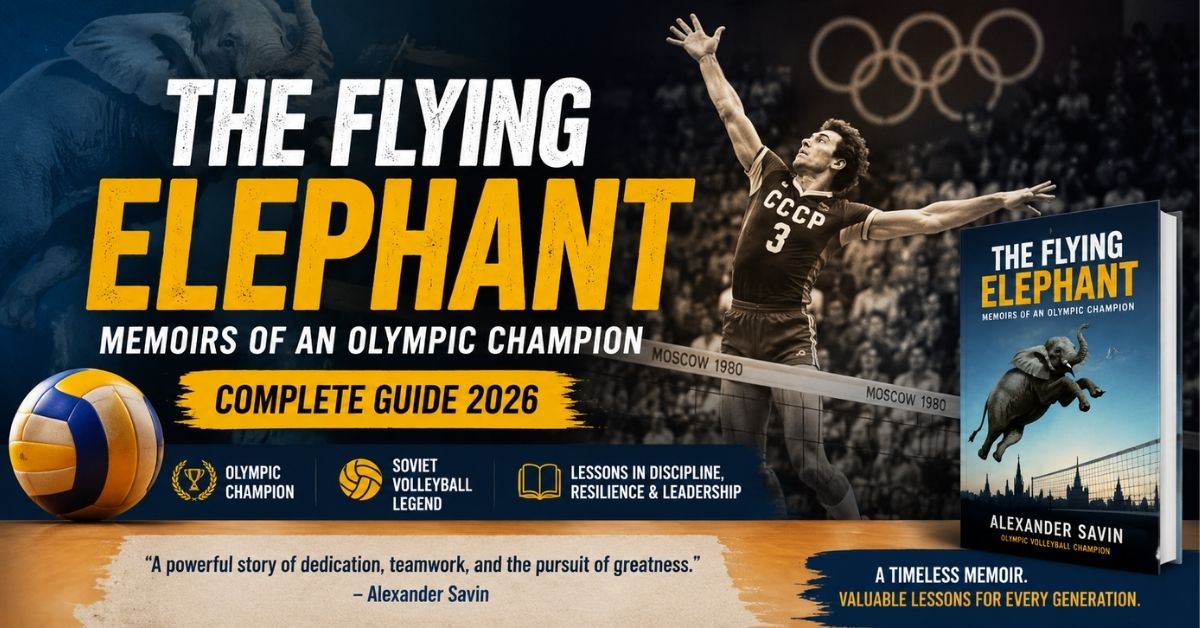
The Flying Elephant Memoirs of an Olympic Champion: Complete Guide 2026
Sports memoirs pull back the curtain on greatness. They show what happens between the headlines and the medal ceremony. The Flying Elephant: Memoirs of an Olympic Champion does exactly that. Written by Olympic volleyball champion Alexander Savin, this volleyball memoir takes you deep into Soviet-era athletics, international volleyball, and one man’s climb to the top of elite sports.
This guide breaks down everything you need to know about the book, the man behind it, and why his story still lands with readers in 2026.
What Is The Flying Elephant: Memoirs of an Olympic Champion?
The Flying Elephant: Memoirs of an Olympic Champion is the autobiography of Alexander Savin, one of the greatest players to ever come out of Soviet volleyball. It isn’t just a list of wins. It’s a sports memoir built around growth, sacrifice, and what it really costs to reach the top of international volleyball.
Unlike a lot of athlete books that lean on fame and celebrity, this one stays grounded. It’s a sports autobiography written for people who want the real story, not just the highlight reel. You get athletic development, Olympic preparation, team culture, and a candid look at the Soviet sports system that shaped him.
What the Memoir Covers
The book moves through Savin’s whole life. It covers his childhood, his rise through Soviet volleyball, his Olympic competition experience, and what came after his playing days ended. Along the way, it touches on coaching philosophy, team dynamics, and the mental side of chasing competitive success. Readers get a first-person account that feels honest rather than polished.
Who Is Alexander Savin?
Alexander Savin stands as one of the most respected names in volleyball history. As a Soviet volleyball player, he built a reputation for sharp attacking, smart positioning, and steady performance under pressure. He competed for the Soviet Union at the 1976 Montreal Olympics, where he won silver, then returned in 1980 to win gold on home soil in Moscow. That combination of Alexander Savin achievements places him among the top Olympic athletes of his era.
What makes his story worth reading isn’t just the medals. It’s the process behind them. Alexander Savin’s career didn’t happen overnight. Years of demanding volleyball training, careful coaching, and steady athlete development turned a talented young player into an Olympic volleyball champion.
Savin’s Early Life
Long before Olympic stages, Savin was just a kid with a growing interest in sport. The memoir spends real time on this stretch of his life, showing how early habits and small wins built the foundation for everything that followed. This part of the book reminds you that perseverance usually starts small, long before anyone’s watching.
Why His Story Still Matters
Most athletic success stories follow a pattern. Talent gets noticed. Training gets harder. Setbacks happen. Breakthroughs follow. Then, after years of work, success arrives. Savin’s memoir tells this story with more honesty than most. You see what sits behind the medal ceremonies, and that’s rare.
Why Is It Called “The Flying Elephant”?
The title grabs your attention right away. At first, “The Flying Elephant” seems like an odd choice for a volleyball book. But once you understand the nickname, it makes perfect sense. Savin stood well over six and a half feet tall, and teammates and journalists gave him the name because of how he combined raw power with surprising lightness at the net.
An elephant usually stands for strength and stability. Flying suggests something unexpected, even impossible. Put together, the title captures a simple idea: real achievement often means defying what people expect of you. For an Olympic athlete competing on the world’s biggest stage, that idea fits perfectly.
The Meaning Behind the Title
The nickname wasn’t just a joke. It described how Savin actually played. He was big enough to dominate the net, yet quick enough to surprise opponents who expected him to move slowly. That contrast became part of his identity as a player.
What the Metaphor Represents
Beyond volleyball, the title speaks to something bigger. It’s about pushing past assumptions, staying committed to long-term growth, and believing in your own potential even when the odds seem stacked against you. These themes show up again and again throughout the book.
The Flying Elephant Memoirs Summary
At its heart, The Flying Elephant Memoirs trace Savin’s path from an eager young athlete to a champion standing on Olympic soil. The story unfolds in stages, and each one adds something new to the picture.
Savin’s Early Years
Like most elite athletes, Savin’s path started with curiosity. The book walks through his childhood, his first steps into volleyball, and his earliest competitions. You see discipline forming well before any real success shows up. Champions rarely get made in one big moment. Excellence tends to build through thousands of small, repeated actions.
Entering Elite Volleyball
As his skills grew, so did the opportunities in front of him. The memoir details his move into advanced training programs, tougher competitive selection, and exposure to elite volleyball coaching. This stretch marks a real turning point. Talent alone stopped being enough. Preparation, adaptability, and mental toughness started to matter just as much.
The Road to Olympic Competition
The Olympic chapters carry the most weight in the book. Savin writes about tournament preparation, locker-room dynamics, rival nations, and the psychological weight of representing his country. These passages help explain the pressure that comes with Olympic preparation at the highest level.
See Also: Newstown CraigScott Capital: Risks, History & Investor Guide 2026
Life Beyond Competitive Volleyball
A lot of sports books end at the final whistle. This one keeps going. Savin reflects on retirement, career transitions, and what his playing days taught him about life after sport. These later chapters give the memoir some real depth and maturity.
Alexander Savin’s Volleyball Career
To fully understand the book, it helps to understand the world Savin competed in. His volleyball career unfolded during one of the strongest stretches in the sport’s history, and that context shapes everything else in the memoir.
Soviet Volleyball’s Golden Era
The Soviet Union built one of the most effective athlete-development systems the sports world has ever seen. Players moved through structured stages designed to spot and grow talent early. The table below shows how that system approached athletic training.
| Development Area | Main Focus |
|---|---|
| Physical Fitness | Strength and endurance |
| Technical Skills | Sport-specific mastery |
| Tactical Awareness | Strategic understanding |
| Sports Psychology | Mental toughness |
| Team Development | Communication and trust |
This full-picture approach helped produce generation after generation of world-class Soviet athletes.
Major Career Achievements
Savin’s volleyball achievements include Olympic medals, international titles, and standout performances at club level with CSKA Moscow. His consistency across so many international tournaments helped cement the Soviet Union’s reputation as a volleyball powerhouse throughout the 1970s and early 1980s.
Key Milestones in Savin’s Career
His path included a silver medal in Montreal in 1976, followed by gold in Moscow in 1980. Between those two Olympics, he built a reputation as one of the most reliable middle blockers in the world, known for serving accuracy, sharp offensive attacks, and strong blocking techniques.
The Evolution of His Playing Style
Savin’s game changed over time. Early on, his size gave him an advantage. As his career matured, he added tactical intelligence and refined defensive positioning to his physical gifts. That combination is part of what made him so hard to play against.
Training Methods Behind Olympic Success
One of the most useful parts of the book is its honest look at volleyball training methods. A lot of modern athletes chase shortcuts. This memoir makes a strong case that lasting success comes from the fundamentals, repeated over and over.
Physical Preparation
Elite volleyball demands serious athleticism. Physical preparation in the book covers strength, speed, vertical jump, endurance, and agility. Every one of these pieces mattered. Small gains, repeated daily, added up over years.
Technical Skill Development
Volleyball success rests on mastering the basics. Technical skill development in Savin’s training meant constant work on serving accuracy, attacking, ball control, and defense. Repetition turned these skills into instinct, so players didn’t have to think twice under pressure.
Tactical Intelligence
Physical skill alone rarely wins championships. Tactical intelligence meant reading opponents, predicting plays, and adjusting volleyball strategy mid-match. This is often what separates a good player from a great one.
The Importance of Consistent Practice
The memoir keeps returning to one idea: consistency beats intensity. Short bursts of effort don’t build champions. Years of steady, focused practice routines do.
Mental Toughness Lessons From The Flying Elephant

Athletic performance isn’t only physical. Mental toughness in sports shows up again and again as a central theme in the book.
Building Confidence Under Pressure
Olympic competition brings enormous expectations. Athletes face media attention, national pride, and personal doubt all at once. Savin credits preparation as the real source of confidence under pressure. When you trust your training, staying calm in big moments gets a lot easier.
Learning From Failure
One of the strongest messages in the book is that setbacks are part of the process, not a detour from it. Learning from failure means treating losses as information rather than defeat. Mistakes point to what needs work.
Staying Focused on Long-Term Goals
Progress rarely moves in a straight line. The memoir shows how staying locked onto long-term goals, even during rough stretches, often decides who eventually succeeds and who doesn’t.
Developing Resilience
Resilience in athletics doesn’t come from avoiding hard moments. It comes from getting through them and coming out sharper on the other side. That idea runs through nearly every chapter of the book.
Teamwork and Leadership in Elite Volleyball
Volleyball is a team sport through and through. No single player wins a match alone, and Savin’s memoir leans hard into that truth.
What Makes a Successful Team
Successful volleyball teams share a few traits again and again: shared goals, accountability, mutual respect, and steady communication. When these pieces line up, a team becomes far stronger than any one player on it.
Savin’s Leadership Lessons
Athlete leadership, according to Savin, isn’t about titles. It’s about showing up, staying composed, and taking responsibility when things go wrong. These lessons on leadership in sports apply just as well outside the gym.
Communication and Trust in Competition
Team communication built the trust that let Savin’s teams perform under pressure. Without that trust, even talented rosters fall apart when the stakes get high.
See Also: Hosted Event PBLGameventd: Complete Guide to Gaming Events in 2026
The Olympic Environment and Soviet Sports Culture
To really understand this book, you need to understand the world it came out of. Cold War sports carried weight far beyond the scoreboard.
International Competition During the Soviet Era
Athletes inside the Soviet sports system trained within one of the most organized programs in the world. That meant strong talent identification, specialized training facilities, and heavy national expectations. The table below outlines some of the pressures Soviet-era athletes dealt with.
| Challenge | Impact on Athletes |
|---|---|
| Constant evaluation | Added pressure |
| Frequent international travel | Adjustment demands |
| Public and national expectations | Mental strain |
| Intense training schedules | Physical fatigue |
| Strong international rivalry | Higher performance standards |
The Cold War and Olympic Sports
During the Cold War, Olympic sports culture carried political weight. A win wasn’t just personal. It represented an entire nation and its ideology on the world stage. That reality shaped how athletes like Savin experienced every match.
Challenges Faced by Elite Athletes
Beyond physical demands, Soviet athletes dealt with isolation, closed training camps, and long stretches away from ordinary life. Savin writes candidly about how little life outside the gym existed during his peak years.
Why the Historical Context Matters
Modern readers see sports through a different lens, shaped by sponsorships and social media. Savin’s memoir offers a reminder that Olympic history once played out in a very different world, and that difference is part of what makes the book worth reading.
Coaching Philosophy and Athlete Development
Great athletes rarely get there alone. Coaching shows up throughout the book as a major influence on Savin’s growth.
The Role of Coaching in Athletic Success
Good coaching goes beyond technique. It builds confidence, sharpens decision-making, and helps athletes manage setbacks. Savin describes his coaching philosophy experience as a partnership, not a hierarchy.
Long-Term Development Over Quick Results
One of the book’s clearest lessons involves patience. Long-term athlete development takes years, not weeks. Soviet training systems leaned on gradual progression, and that stands in sharp contrast to a lot of modern coaching that chases fast results.
Passing Knowledge to Future Generations
Athlete mentorship and generational learning run through the book as well. Older players passed knowledge down to younger ones, and coaches built on lessons from those who came before them. That chain kept strengthening the whole program over time.
Historical and Literary Value of The Flying Elephant
Plenty of sports books focus only on personal glory. This memoir aims for something broader, sitting somewhere between a personal story and a sports historical document.
A Rare Insider Perspective
Few people ever get an insider perspective on Olympic-level competition, let alone the inner workings of the Soviet sports programs that shaped so many champions. This book closes that gap.
Preserving Volleyball History
Volleyball has produced countless great athletes, but not every generation leaves behind a detailed personal account. Savin’s memoir helps with preservation of sports history, giving future players and fans something real to learn from.
Its Contribution to Sports Literature
The book blends autobiography, Olympic history, and coaching insight into one package. That mix gives it a real place within sports literature, appealing to readers well beyond volleyball fans.
How It Compares With Other Olympic Memoirs
Many Olympic memoirs lean heavily on medal-winning moments. Savin’s book spends more time on the process behind those wins. That focus on preparation, failure, and growth makes it feel more educational than celebratory.
Key Lessons From The Flying Elephant
The lasting value of this book sits in its lessons. Even though Savin’s experiences come from elite volleyball, the ideas stretch far beyond the sport.
Lessons for Athletes
Athletes reading this book pick up lessons on consistency, preparation, handling setbacks, and the value of teamwork. One idea keeps surfacing: success is rarely dramatic. It’s usually the result of disciplined habits, repeated daily.
Lessons for Coaches
Coaches get real insight into talent development, leadership, team culture, and long-term planning. The memoir makes a strong case that good coaching means developing people, not just players.
Lessons for Students and Professionals
Even readers with zero interest in volleyball can pull value from this book. Its themes apply to career development, education, entrepreneurship, and personal growth. The challenges athletes face often mirror challenges people run into in everyday work and life.
Lessons on Discipline and Continuous Improvement
Discipline and continuous improvement sit at the center of everything Savin writes about. Neither one is glamorous. Both are essential.
See Also: Highlights of Nummazaki: Japan’s Hidden Coastal Gem Guide for 2026
Alexander Savin’s Journey Through High-Performance Principles
Looking at Savin’s career reveals patterns shared by high performers across all kinds of fields, not just sports.
Deliberate Practice
Elite performers rarely lean on raw talent alone. They practice with focus, targeting specific weaknesses instead of just going through the motions. Savin’s training reflects this idea over and over.
Resilience and Recovery
Every athlete hits rough patches. What separates the best is how they respond. Successful competitors treat setbacks as fuel for improvement rather than reasons to quit.
Continuous Improvement
Even after reaching elite status, Savin kept refining his game. That mindset of continuous improvement stays just as relevant today, especially in fast-changing fields outside of sports.
Applying High-Performance Principles Today
High-performance principles like deliberate practice, resilience, and steady improvement translate well beyond the volleyball court. Anyone chasing a big goal can borrow from this framework.
How Accurate and Reliable Is The Flying Elephant?
Readers often question how reliable a memoir can be, and that’s a fair question to ask here too.
Strengths of the Memoir
The book’s credibility rests on a few solid factors: firsthand experience, detailed storytelling, and Savin’s well-documented professional record as an Olympic-level competitor. Those elements add real weight to the story.
Understanding a First-Person Perspective
Every memoir reflects one person’s point of view, and that doesn’t make it less valuable. A first-person sports narrative gives you an authentic account of how events actually felt to live through, even if it isn’t the full picture from every angle.
Memoir vs. Historical Record
The smartest way to read this book is as both a personal story and a partial historical source. Treat it as Savin’s truth, and pair it with outside sources if you want a fuller historical picture.
Why The Flying Elephant Still Matters in 2026
A lot of sports books fade fast. This one keeps finding readers because its core ideas haven’t aged.
Timeless Principles of Athletic Success
Training methods evolve. Sports science keeps advancing. But hard work, discipline, teamwork, and perseverance stay just as important now as they were during Savin’s playing days.
What Modern Athletes Can Learn
Today’s players benefit from understanding what earlier generations went through. The book offers Olympic training insight, leadership lessons, and mental performance strategies that hold up decades later.
Lessons That Apply Beyond Sports
Many readers find the book’s biggest value has nothing to do with volleyball at all. Whether you’re building a business, finishing a degree, or working toward any ambitious goal, the lessons transfer surprisingly well.
Frequently Asked Questions
Who Is Alexander Savin?
Alexander Savin is a former Soviet volleyball player and Olympic champion, known for his role in Soviet volleyball’s golden era and for writing this memoir about his career.
What Is The Flying Elephant About?
It follows Savin’s path from an aspiring young athlete to Olympic champion, covering training, teamwork, leadership, and the realities of elite competition along the way.
Is The Flying Elephant Based on Real Events?
Yes. The book draws directly on Savin’s own experiences as an elite volleyball player competing during the Soviet era.
Why Is the Memoir Important to Volleyball History?
It offers a rare firsthand account of Olympic-level volleyball and gives real insight into athlete development inside the Soviet sports system.
What Does “The Flying Elephant” Mean?
The nickname came from Savin’s combination of size and surprising agility at the net, and the title carries a broader message about defying expectations.
Is the Book Suitable for Non-Volleyball Readers?
Yes. Volleyball provides the backdrop, but the themes of perseverance, leadership, and resilience speak to a much wider audience.
Is the Memoir Suitable for Young Athletes?
The book’s lessons on discipline, patience, and long-term growth make it a solid read for young athletes still building their own path.
Does the Book Discuss the Political Climate of the Soviet Era?
Yes, the memoir touches on the political weight that Cold War-era sports carried, especially around Olympic competition.
Is The Flying Elephant Still in Print?
The book remains available, including a Kindle edition, making it accessible to readers looking to pick it up today.
Does the Book Include Photos From Savin’s Career?
Yes, the memoir includes a large collection of photographs documenting training camps, championships, and behind-the-scenes moments from his career.
Final Thoughts
The Flying Elephant: Memoirs of an Olympic Champion is more than a book about volleyball. It’s a close look at what excellence actually costs and what it actually takes. Through Savin’s eyes, readers see years of preparation, real competition, personal sacrifice, and steady growth.
The memoir also does something else worth noting. It preserves a piece of sports history that might otherwise fade. Through this Alexander Savin memoir, readers get real insight into Soviet-era athletics, international volleyball, and the kind of discipline that builds a champion. Its message stays simple and true: big achievements start with small, ordinary habits, practiced again and again over time.

Ryan Mitchell is a writer and language enthusiast at MeaningZen. He creates simple guides on slang, word meanings, grammar, and modern internet language. His goal is to make confusing words and phrases easy to understand.