
Mastering Your Health: Supplement Management With TheSpoonAthletic (Complete Guide 2026)
Modern health stores are full of choices. Vitamins sit next to protein powders. Recovery blends sit next to focus formulas. It feels like progress. Mastering Your Health But more choice has not made health easier. It has made it more confusing.
This is why supplement management matters so much in 2026. A smart supplement strategy is not about buying more. It is about buying right. TheSpoonAthletic built its whole philosophy around this idea. This guide will show you how to build a personalized supplement plan that actually works for your body and your goals.
By the end, you will know how to build a daily supplement routine, avoid common mistakes, and use dietary supplements the smart way. Let’s start from the beginning.
What Is Supplement Management and Why Does It Matter?
Supplement management is a simple idea. It means you plan, track, and adjust your supplement use over time. You do not just buy a product and hope for the best. You choose it for a reason. You watch how it works. You change your plan when your needs change.
Most people skip this step. They buy nutritional supplements because an ad looked convincing. This leads to wasted money and weak results. A real supplement plan looks at your goals first. Then it picks the right tools for the job. This is why supplement management matters so much for real, lasting health.
Supplement Management vs. Simply Taking Supplements
There is a big difference between taking supplements and managing them. Taking supplements is random. You buy what looks interesting. Managing supplements is planned. You buy what you actually need.
| Just Taking Supplements | Managing Supplements |
|---|---|
| Random purchases | Goal-based choices |
| No clear plan | Structured supplement routine |
| Rarely tracked | Progress is tracked |
| Follows trends | Follows evidence |
| Short-term habit | Long-term strategy |
This table shows why structure matters. A plan turns guesswork into a system you can trust.
Why a Strategic Supplement Plan Matters
A strategic plan saves you time and money. It also protects your health. When you know why you take each product, you can judge if it is working. This is the heart of good supplement management.
Without a plan, people often end up with a shelf full of unused bottles. With a plan, every product has a job to do. This small shift in thinking changes your results over time.
Understanding the Modern Supplement Landscape Mastering Your Health
The supplement market keeps growing every year. More people want better energy levels, stronger athletic performance, and a healthier body. This growth is good, but it also creates noise. Knowing the main categories helps you cut through that noise fast.
Most products fall into four simple groups. Each group serves a different purpose in your daily supplement routine. Once you understand these groups, choosing supplements becomes much easier.
Vitamins and Minerals
Vitamins and minerals support the basic functions of your body. This group includes vitamin D supplements, vitamin C, magnesium supplements, zinc, iron, and calcium. These nutrients help your bones, blood, immune system, and energy production.
Most people get some of these nutrients from food. But nutrient deficiencies are still common, even in wealthy countries like the United States. This is why many people still need extra support from supplements.
Sports Nutrition Supplements
Sports nutrition supplements target training and recovery. This includes protein supplements, creatine, electrolyte supplements, amino acids, and carbohydrate mixes. Active people often use these to support muscle recovery and athletic performance.
These products can be very useful. But they work best only when your basic diet is already solid. They are not a replacement for real food. They are a boost on top of it.
Cognitive and Focus Supplements
Cognitive supplements aim to support mental performance. This group includes omega-3 fatty acids, L-theanine, caffeine, and adaptogens. Many people use them for better focus during work or study.
Brain health depends on steady blood sugar, good sleep, and enough nutrients. Supplements can help fill small gaps. But they cannot replace poor sleep or a bad diet.
General Wellness Supplements
Wellness supplements support overall health, not one single goal. This group includes probiotics, multivitamins, collagen, and fiber. People often use these for gut health, skin, and long-term wellness.
These products often work slowly. Results build up over weeks or months, not days. Patience matters here more than with other supplement types.
TheSpoonAthletic Approach to Smarter Supplement Management
TheSpoonAthletic does not follow every new trend. Instead, it builds every recommendation around real outcomes and real evidence. This approach keeps things simple, even when the supplement world feels overwhelming.
The philosophy rests on three simple ideas. Every choice should serve a clear goal. Health should always come before performance. And every decision should rest on scientific evidence, not marketing noise. These three ideas guide the rest of this guide.
See Also: The Flying Elephant Memoirs of an Olympic Champion: Complete Guide 2026
Building a Goal-Driven Supplement Strategy
Every supplement should serve a purpose. Common goals include building muscle, improving endurance, boosting exercise recovery, raising energy, and supporting immune function. Without a clear goal, supplement use becomes guesswork.
TheSpoonAthletic encourages people to name their goal before buying anything. This one step removes most of the confusion in the supplement aisle.
Putting Health Before Performance
Elite performance starts with basic health. Before adding advanced products, focus on nutrient intake, sleep quality, hydration, and a balanced diet. These basics create the environment where supplements can actually help.
Skipping this step is a common mistake. Many people buy performance products while ignoring sleep and food. This backwards approach rarely works well.
Making Evidence-Based Supplement Choices
Marketing claims can sound very convincing. But scientific evidence should guide your final decision. Evidence-based supplements rest on real human studies, not just clever branding.
This mindset protects your wallet and your health. It also sets up the deeper science section later in this guide.
How to Build a Personalized Supplement Management Plan
A personalized supplement plan starts with self-reflection. No two people share the exact same body, diet, or goals. This is why copying someone else’s routine rarely works well.
Building your own plan takes just a few honest steps. These steps turn a confusing topic into something clear and manageable.
Identify Your Primary Health or Fitness Goal
Start by asking yourself simple questions. Do you want more energy? Do you want to build muscle? Is weight management your main focus? Are you training for a specific event?
Your answer shapes every choice that follows. This is the true starting point of any good supplement strategy.
Evaluate Your Daily Diet and Nutrition
Supplements work best when they support good food choices. Look closely at your protein intake, fruit and vegetable intake, whole grains, and healthy fats. Many nutritional gaps become obvious once you look honestly at your plate.
This step often reveals the real problem. Sometimes people do not need more supplements. They need better meals first.
Identify Potential Nutrient Gaps
Certain signs point toward common nutrient deficiencies. Learning these signs helps you target the right nutrients instead of guessing.
| Nutrient | Common Warning Signs |
|---|---|
| Vitamin D | Fatigue, low mood |
| Iron | Weakness, low endurance |
| Magnesium | Muscle cramps, poor sleep |
| Omega-3 | Slow recovery, inflammation |
| Zinc | Weak immune function |
This table gives you a quick starting point. A doctor or dietitian can confirm these gaps with proper testing.
Choose Supplements Based on Your Individual Needs
Once you know your gaps, you can choose supplements with real purpose. This step matters because individual response to supplements varies a lot. What works well for a friend may not work the same way for you.
Age, activity level, genetics, and health history all affect your needs. This is why a personalized supplement plan always beats a generic one.
Create a Consistent Supplement Routine
A supplement routine only works if you follow it. Consistency matters more than perfection. A simple plan followed every day beats a complex plan followed once a week.
Set reminders. Keep products in a visible spot. Small habits like these protect your long-term consistency.
Essential Supplements and Nutrients to Consider
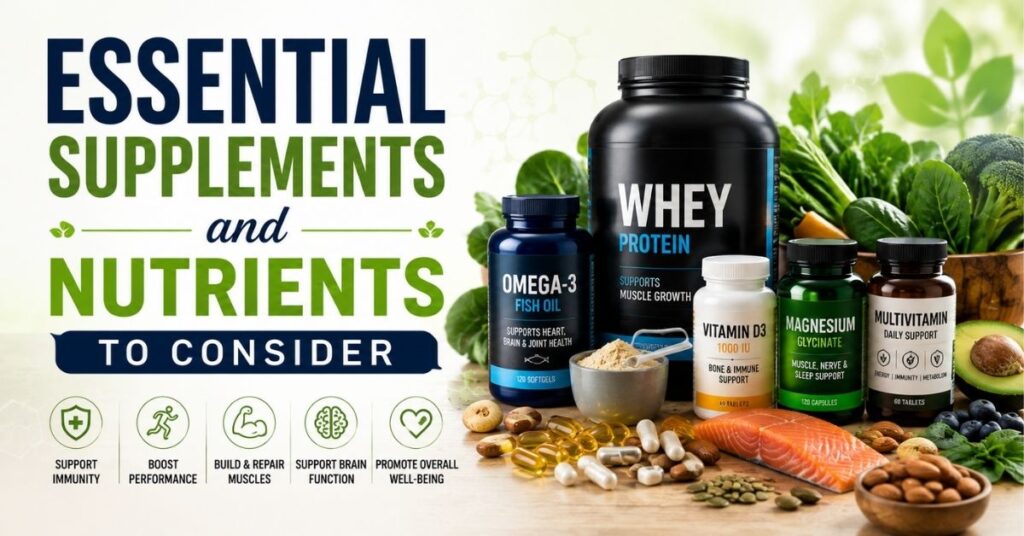
Some nutrients matter more than others for most people. These form the foundation of a smart supplement plan. Skipping straight to advanced products before covering these basics is a common and costly mistake.
The five nutrients below cover most common health and fitness goals. Together, they support energy, recovery, strength, and long-term wellness.
Protein for Muscle Growth and Recovery
Dietary protein builds and repairs muscle tissue. It also supports exercise recovery and helps you feel full after meals. Active people often need more protein than sedentary people realize.
Protein supplements offer a simple way to close this gap, especially after workouts. Whey, casein, and plant-based options all work well when used consistently.
Omega-3 Fatty Acids for Overall Health
Omega-3 fatty acids support heart health, brain function, and healthy inflammation levels. Fish oil and algae oil are the most common omega-3 supplements.
Most people do not eat enough fatty fish each week. This makes omega-3 one of the most useful gap-filling supplements for a wide range of people.
Vitamin D for Bone and Immune Support
Vitamin D supports bone health, immune function, muscle strength, and hormone balance. Sunlight helps the body make vitamin D naturally, but many people still fall short.
This is especially true during winter months or for people who spend most of their day indoors. Vitamin D supplements are one of the most commonly recommended products for this reason.
Magnesium for Recovery and Well-Being
Magnesium supports hundreds of processes inside the body. It plays a role in sleep quality, muscle function, energy production, and nervous system health.
Magnesium supplements are popular for evening use, since many people report better sleep and reduced muscle tension. Diet alone often falls short of daily magnesium needs.
Electrolytes for Hydration and Exercise
Electrolytes support fluid balance and muscle function during exercise. Sweat carries away sodium, potassium, and other minerals that the body needs to replace.
Hydration supplements help active people avoid cramps and fatigue during long or intense workouts. They matter most during hot weather or extended training sessions.
Supplement Timing: When Should You Take Supplements?
Supplement timing is not the most important factor in your results. But it can still improve how your body uses certain nutrients. Knowing the best time to take supplements helps you get slightly better results from the same products.
The right timing depends on the supplement type and your daily schedule. The sections below break this down into simple, practical guidance.
Pre-Workout Supplement Timing
Supplements before exercise often include caffeine, electrolytes, and carbohydrates. Most people take these thirty to sixty minutes before training. This timing gives the body enough time to absorb and use these nutrients.
This approach supports better energy and focus during the workout itself.
See Also: Highlights of Nummazaki: Japan’s Hidden Coastal Gem Guide for 2026
Post-Workout Nutrition and Recovery
Supplements after exercise usually focus on protein, carbohydrates, and hydration. This combination supports muscle recovery and helps refill energy stores used during training.
Many athletes treat this window as a key part of their recovery supplements routine.
Morning vs. Evening Supplement Timing
Morning supplements often include multivitamins, vitamin D supplements, and omega-3s. These pair well with breakfast and daily energy needs.
Evening supplements often include magnesium supplements and other recovery-focused products. These support better sleep and muscle relaxation before bed.
Does Supplement Timing Really Matter?
Timing matters, but not as much as total daily intake and consistency. A supplement taken at the “wrong” time still offers benefits if you take it regularly. Do not let perfect timing become an excuse to skip a supplement altogether.
Total daily consistency almost always beats perfect timing.
Supplement Safety: How to Avoid Risks and Interactions
Supplement safety should always come first. In the United States, the FDA does not approve supplements before they reach store shelves the way it does with medications. This makes personal research and label reading extra important.
The sections below cover the main safety habits every smart supplement user should follow.
Check for Overlapping Ingredients
Many products share similar ingredients. You might take a multivitamin, a sleep formula, and a recovery blend, only to find all three contain magnesium. This overlap can push your intake past safe levels without you realizing it.
Always check full ingredient lists before combining new products.
Understand Dosages and Upper Intake Limits
Every nutrient has a recommended dosage and an upper intake limit. More is not always better. Going past the upper limit can cause side effects instead of benefits.
Checking these limits protects you from accidental overuse.
Read Supplement Labels Carefully
Supplement labels hold important safety information. Check the serving size, the full ingredient list, and any allergen warnings before buying a product.
Look for third-party quality seals as well. These marks add an extra layer of trust to any supplement dosage claim on the label.
Consider Medications and Potential Interactions
Medication interactions are a serious concern for many people. Certain supplements can interact with blood thinners, thyroid medication, or antidepressants. This can weaken the medication or create unwanted side effects.
Anyone taking prescription medication should discuss new supplements with a doctor or pharmacist first.
When to Seek Professional Guidance
Some situations call for expert help. This includes chronic health conditions, current medication use, unexplained symptoms, or high-level athletic training. Registered dietitians, sports nutrition specialists, and physicians can offer guidance that self-research cannot fully replace.
Professional input often catches issues that are easy to miss on your own.
Common Supplement Management Mistakes to Avoid
Many people slow their own progress without realizing it. These mistakes are common, but they are also easy to fix once you notice them. Avoiding them can save both money and frustration.
The five mistakes below appear most often among people trying to manage their own supplement use.
Taking Too Many Supplements
A full cabinet of products does not guarantee better results. Often, a few well-chosen supplements outperform a dozen random ones. More products usually mean more cost, not more benefit.
Using Supplements Instead of Improving Your Diet
Supplements support a diet. They do not replace one. Relying on pills while ignoring nutrient-dense foods rarely leads to lasting results.
Following Supplement Trends Without Evidence
Social media trends change fast. Your body’s real needs do not change nearly as quickly. Chasing viral products often wastes money on things you do not actually need.
Choosing Products Based Only on Marketing
Flashy packaging and bold claims do not equal real results. Strong products rest on clinical research, not clever advertising. Always look past the marketing before you buy.
Failing to Track Results
Without tracking, it is almost impossible to know what is working. Supplement tracking turns guesswork into real feedback, which helps you build a smarter routine over time.
The Role of Nutrition in Effective Supplement Management
Supplements can support a healthy lifestyle. They cannot replace one. This idea sits at the center of good supplement management, and it deserves real attention.
Good nutrition creates the foundation. Supplements simply build on top of that foundation.
Why Nutrient-Dense Foods Come First
Nutrient-dense foods offer more than isolated nutrients. Whole foods deliver fiber, antioxidants, and natural nutrient combinations that work together inside the body. Supplements cannot fully copy this natural teamwork.
This is why food should always come before pills in your priority list.
Building a Food-First Nutrition Strategy
A food-first approach means building meals around lean proteins, fruits, vegetables, whole grains, and healthy fats. Supplements then fill in the small gaps that remain.
This strategy keeps your healthy lifestyle sustainable, since it does not depend fully on products alone.
Using Supplements to Fill Nutritional Gaps
Even a great diet can leave small gaps. Busy schedules, food preferences, and regional food access all play a role. Dietary supplements work best when they target these specific, real gaps instead of replacing whole food groups.
This targeted approach keeps your supplement plan efficient and affordable.
The Science Behind Effective Supplement Management
Science separates real results from marketing hype. Understanding a few key ideas helps you judge any supplement claim with more confidence.
This section breaks down the core scientific concepts behind smart supplement choices.
Why Supplement Bioavailability Matters
Bioavailability describes how well your body can absorb and use a nutrient. Not all supplement forms absorb equally well. Formulation, timing, and food intake can all affect absorption.
A cheaper product with poor bioavailability may offer less real benefit than a slightly pricier, better-absorbed option.
See Also: Newstown CraigScott Capital: Risks, History & Investor Guide 2026
Understanding Individual Responses to Supplements
Individual response to supplements varies widely between people. Genetics, lifestyle, age, and health history all shape how your body reacts to a given product.
This is exactly why a personalized supplement plan works better than a one-size-fits-all approach.
Evaluating Supplement Research and Evidence
Strong research shares a few common traits. Look for human participants, placebo-controlled design, solid sample sizes, and peer review. These features separate trustworthy scientific evidence from weak or biased studies.
Learning to spot these traits helps you judge any new supplement claim quickly.
Quality, Purity, and Third-Party Testing
Quality testing and purity matter just as much as the ingredients themselves. Third-party testing from groups like USP, NSF, or ConsumerLab confirms that a product contains what its label claims.
This step matters even more for athletes, since some contaminated products have caused failed drug tests in competitive sports.
Supplement Management for Athletes and Active Individuals
Athletes often need a more focused approach to supplement management. Training demands, recovery needs, and performance goals all raise the stakes for making smart choices.
The sections below focus on the unique needs of active individuals and competitive athletes.
Supplements for Athletic Performance
Performance supplements like creatine, caffeine, and beta-alanine have strong research support for many athletes. These products can support strength, power, and endurance when used correctly.
Athletic supplements work best when paired with a solid training plan and proper nutrition.
Supporting Muscle Recovery and Training
Recovery supplements help the body repair and rebuild after hard training. Protein, omega-3s, and proper hydration all play a role in reducing soreness and supporting the next workout.
Consistent recovery habits often matter more than any single product.
Managing Hydration and Electrolytes
Hydration needs rise sharply during intense training, especially in hot weather. Electrolyte supplements help replace what sweat removes and support steady performance throughout a workout or event.
Athletes training for long durations should pay close attention to this area.
Balancing Performance Goals With Long-Term Health
Chasing short-term performance gains can sometimes hurt long-term health. Overuse of stimulants or extreme supplement stacks may create problems down the road. A smart supplement strategy always balances today’s performance with tomorrow’s health.
This balance protects both your results and your long-term wellbeing.
How to Track and Optimize Your Supplement Routine
A good supplement plan changes over time. Tracking results helps you know when to adjust and when to stay the course. This step turns your routine into a living system instead of a fixed decision.
The sections below explain exactly how to track and refine your supplement routine over time.
Which Supplement Results and Metrics Should You Track?
Certain metrics offer clear insight into how well your plan is working. Watching these over time reveals real patterns.
| Metric | Why It Matters |
|---|---|
| Energy Levels | Reflects daily performance |
| Strength | Shows training progress |
| Recovery | Signals exercise readiness |
| Sleep Quality | Reflects overall wellness |
| Body Composition | Tracks long-term change |
This simple table gives you a starting checklist for supplement tracking.
Keeping a Supplement Journal
A simple journal can reveal patterns that memory alone would miss. Record what you take, the dosage, the timing, and how you feel afterward. Over a few weeks, clear patterns often start to appear.
Monitoring Benefits and Side Effects
Track both positive changes and possible side effects. Some supplements cause mild digestive upset or headaches in certain people. Noticing these signs early helps you adjust before a small issue grows larger.
When to Adjust or Stop a Supplement
Consider stopping or changing a supplement if you notice no benefit after several weeks, if side effects appear, or if your goal changes completely. A good plan stays flexible instead of locked in place forever.
How Often to Review Your Supplement Plan
Most experts suggest a full review every few months, or sooner if your goals shift significantly. Regular review keeps your supplement plan aligned with your current needs instead of your needs from a year ago.
How TheSpoonAthletic Simplifies Supplement Management
TheSpoonAthletic built its entire approach around reducing confusion. Instead of overwhelming people with endless product choices, the focus stays on clear, practical guidance.
This structured approach turns a complicated topic into something manageable for everyday people.
Creating a Practical Supplement Strategy
TheSpoonAthletic emphasizes real-world usability over complexity. A supplement strategy should fit into a normal daily schedule, not demand a complete lifestyle overhaul.
This practical mindset makes the plan easier to follow long-term.
Making Smarter and More Informed Choices
Every recommendation ties back to scientific evidence and real individual needs. This evidence-based approach helps people avoid wasted money on products that will not actually help them.
Building a Sustainable Approach to Supplement Use
A sustainable approach favors simple, consistent habits over dramatic, short-lived changes. This mindset supports a healthy lifestyle that lasts for years, not just for a few motivated weeks.
Creating a Sustainable Supplement Routine for Long-Term Health
The best health strategies last for years, not weeks. A sustainable supplement routine rests on simplicity and consistency rather than complexity.
The four principles below support a routine you can realistically maintain over the long term.
Start With the Basics
Cover foundational nutrients like protein, vitamin D, magnesium, and omega-3s before adding advanced or trendy products. These basics offer the biggest return for most people.
Keep Your Supplement Routine Simple
A simple routine is easier to follow every single day. Complicated stacks with many products often collapse within a few weeks due to sheer effort and cost.
Focus on Consistency and Healthy Habits
Consistency beats intensity over the long run. A daily supplement routine followed reliably will outperform an aggressive plan followed only occasionally.
Reassess Your Needs as Your Goals Change
Your needs today may differ greatly from your needs next year. Regular reassessment keeps your plan relevant as your body, goals, and lifestyle continue to change.
Frequently Asked Questions About Supplement Management
How Many Supplements Should a Person Take Daily?
There is no single correct number. Most effective routines rely on a small group of targeted products rather than a large, unfocused stack.
Can Supplements Replace a Healthy Diet?
No. Supplements can support a balanced diet, but they cannot fully replace the nutrients and benefits found in whole foods.
How Long Does It Take to See Results From Supplements?
Results vary by product and by person. Some supplements show effects within days, while others need weeks or months of steady use.
Should Athletes Follow a Different Supplement Strategy?
Yes. Athletes usually have higher needs for recovery, hydration, and performance support compared to less active individuals.
What Supplements Are Commonly Overused?
Pre-workout formulas, stimulants, and overlapping vitamin products are among the most commonly overused supplement types.
How Often Should a Supplement Plan Be Reviewed?
Most experts recommend a review every few months, or immediately after any major change in health goals.
Final Thoughts
Mastering your health takes more than buying the newest product on the shelf. Real results come from planning, consistency, and honest self-evaluation.
Effective supplement management removes waste and builds a system around your actual goals. Whether your focus is athletic performance, faster recovery, steady energy, or long-term wellness, a clear plan makes the difference.
TheSpoonAthletic proves that better health does not come from taking more. It comes from taking the right products, at the right time, for the right reasons. Build your personalized supplement plan today, and let every choice support a stronger, healthier future.

Ryan Mitchell is a writer and language enthusiast at MeaningZen. He creates simple guides on slang, word meanings, grammar, and modern internet language. His goal is to make confusing words and phrases easy to understand.