
Best Pasticho Venezuelan Lasagna Near Me: Complete Guide 2026
You’re standing in your kitchen at 7 PM, scrolling through food apps, and nothing looks right. You want something rich. Something creamy. Something that feels like a hug on a plate. That’s when the craving hits: pasticho. If you’ve typed “best pasticho Venezuelan lasagna near me” into Google more than once this month, you’re in good company. This dish has quietly become one of the most searched-for comfort foods from Latin American cuisine, and once you taste it, you’ll understand why.
This guide covers everything. We’ll talk about where pasticho comes from, what makes it different from regular traditional lasagna, how much it costs, and how to spot the real deal versus a lazy imitation. Grab a coffee. Let’s dig in.
What Is Pasticho? Understanding Venezuela’s Take on Lasagna
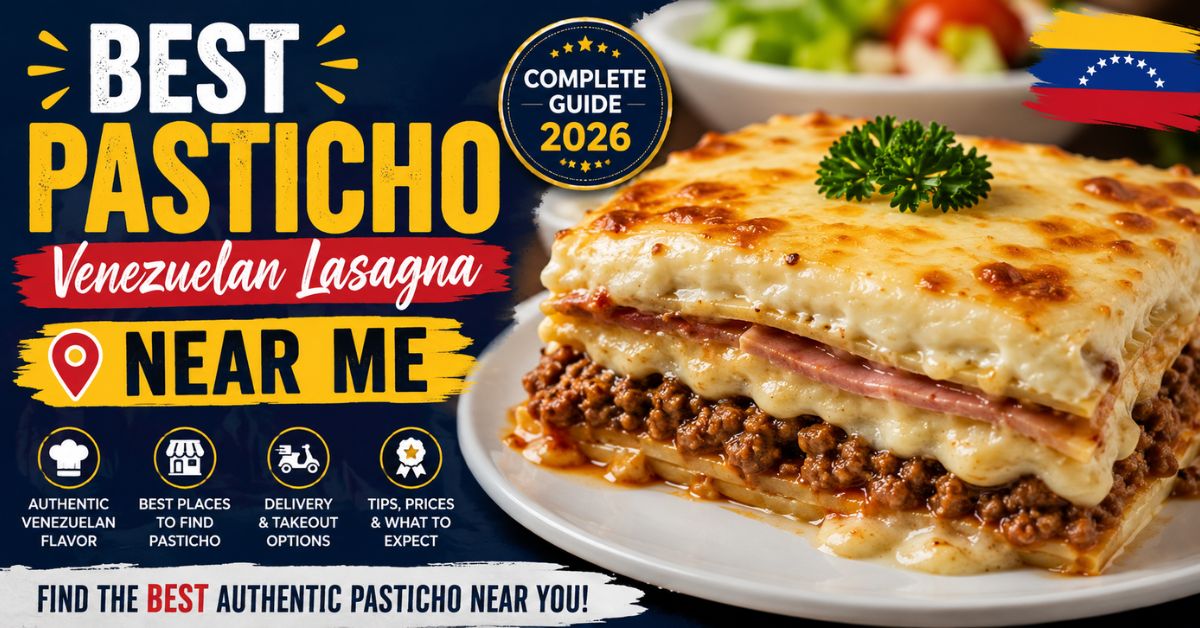
Pasticho is Venezuela’s answer to baked lasagna. It’s not a copy. It’s not a knockoff. Think of it as a cousin who grew up in a different house and picked up different habits. The dish uses pasta sheets, layers of ground beef in tomato sauce, and a thick, silky béchamel sauce instead of leaning hard on ricotta. Cheese melts across the top. Sometimes there’s ham tucked between the layers. It’s a layered pasta dish built for sharing, and it shows up at nearly every big Venezuelan family event you can name.
Ask any Venezuelan what pasticho means to them, and you won’t get a short answer. It’s the dish grandmothers make for Sunday lunch. It’s the tray that shows up at birthdays. It’s proof that Venezuelan comfort food doesn’t need to be complicated to be unforgettable.
The Origins and Cultural Importance of Pasticho
After World War II, Italian immigrants arrived in Venezuela by the thousands. They brought their recipes with them, including classic lasagna. But food, like language, changes shape when it moves to a new home. Venezuelan cooks adjusted the recipe using what they had on hand and what their families liked best. Over a few decades, “lasagna” turned into “pasticho,” a name now recognized across the entire country.
Nobody knows exactly why the name changed, and honestly, that’s part of the charm. What matters more is how deeply the dish became woven into daily life. Today, pasticho isn’t just food. It’s tradition on a plate. Families pass down their own version of the recipe, tweaking the meat filling or the cheese blend, and guarding their “secret” ingredient like it’s a family heirloom.
Why Venezuelans Love Pasticho
People love pasticho for reasons that go beyond taste, though the taste alone would be enough. It’s rich without feeling too heavy. It reheats beautifully, which matters a lot when you’re feeding a big family. And it holds sentimental value: for many Venezuelans living abroad, one bite of pasticho brings back childhood kitchens and noisy family tables.
There’s also the practical side. Pasticho feeds a crowd. One large tray can serve six to eight people without breaking a sweat. That makes it the go-to dish for parties, holidays, and any gathering where someone says, “just bring something everyone will eat.”
What Makes Venezuelan Pasticho Different From Italian Lasagna?
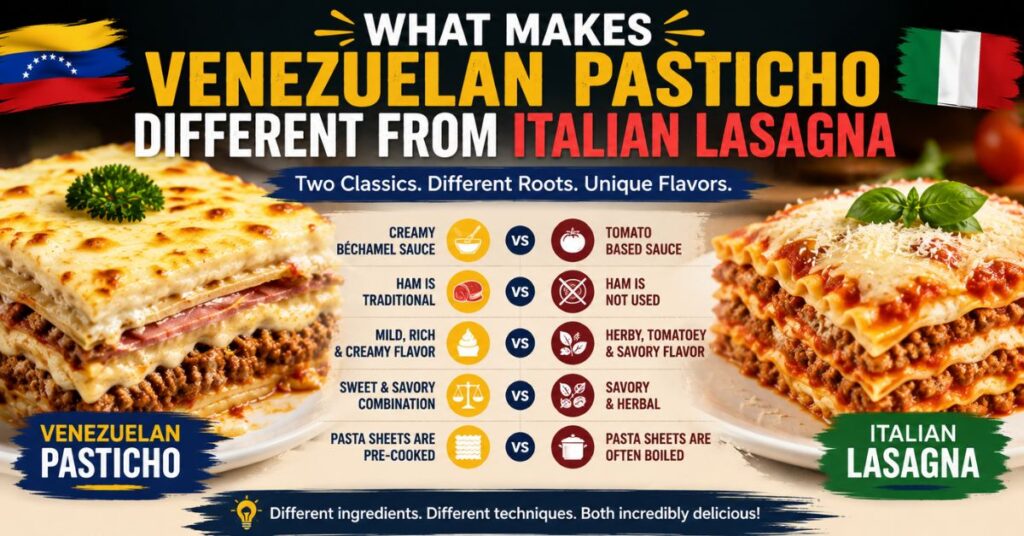
At a glance, pasticho and Italian lasagna look like siblings. Both have pasta layers, both get baked, and both come out golden on top. But the differences show up the moment you take a bite. Venezuelan pasticho leans much harder into creamy sauce, and it often skips ricotta entirely in favor of a white sauce made from butter, flour, and milk.
The flavor profile also shifts. Italian lasagna tends to taste bold and savory, built around the richness of the meat sauce. Pasticho softens that intensity with melted cheese and béchamel, creating something that feels smoother and, honestly, a little more indulgent.
Creamy Béchamel and Layered Texture
The béchamel is the real star of Venezuelan pasticho. While some Italian lasagna recipes use béchamel too, Venezuelan cooks pour it on generously, layer after layer. The result is a dish that’s noticeably softer and creamier than most traditional lasagna you’ll find in an Italian restaurant. Nutmeg often goes into the béchamel, giving it a warm, slightly spiced background note that most people can’t quite name but always notice.
Texture matters here just as much as flavor. A well-made pasticho holds its shape when sliced, yet still feels soft and almost velvety inside. That balance takes practice. Too much béchamel and the dish turns soupy. Too little and you lose the creaminess that makes pasticho so special in the first place.
Cheese, Ham and Meat Sauce Differences
Cheese choice sets pasticho apart too. Most recipes call for mozzarella cheese and Parmesan cheese, sometimes mixed with a Venezuelan white cheese if the cook can find it. These cheeses melt into a golden, slightly crisp top layer that contrasts nicely with the soft filling underneath.
Then there’s the ham and cheese combination, a detail that surprises a lot of first-time tasters. Thin slices of ham go between the pasta layers, adding a salty depth that regular Italian lasagna almost never includes. The meat sauce itself usually simmers for a long time with onions, garlic, and herbs like oregano, building a flavor base that’s rich but not overpowering.
Pasticho vs Traditional Italian Lasagna: Quick Comparison
| Feature | Venezuelan Pasticho | Traditional Italian Lasagna |
| Main cream layer | Béchamel (heavy use) | Ricotta or béchamel, varies by region |
| Cheese | Mozzarella, Parmesan, regional white cheese | Ricotta, mozzarella, Parmesan |
| Ham | Common | Rare |
| Texture | Extra creamy | Firmer |
| Flavor | Rich, smooth, comforting | Bold, savory |
What Ingredients Are Used in Authentic Venezuelan Pasticho?
Good pasticho starts with good ingredients, and there’s no shortcut around that. Restaurants and home cooks who take the dish seriously prepare each component separately before assembling it. That means cooking the meat filling on its own, making the béchamel from scratch, and only combining everything at the very end.
The ingredient list isn’t exotic, but it does need to be handled with care. Ground meat, tomato sauce, milk, butter, flour, and a handful of cheeses form the backbone of the dish. Getting the ratios right is what separates a forgettable pasticho from one people talk about for weeks.
Read More: PlusStories com Review: What It Offers, Safety & Legitimacy
Essential Pasticho Ingredients
A traditional pasticho recipe relies on a fairly short list of core ingredients, each doing important work. Pasta sheets form the structure. Ground beef cooked down with tomato sauce, onions, and garlic builds the savory filling. The béchamel comes together from butter, flour, whole milk, salt, pepper, and a touch of nutmeg. On top, a blend of mozzarella cheese and Parmesan cheese melts into that signature golden crust everyone recognizes.
| Ingredient | Purpose |
| Lasagna sheets | Structure and layering |
| Meat sauce | Savory, rich flavor |
| Béchamel sauce | Creaminess and moisture |
| Mozzarella | Melted, stretchy top layer |
| Parmesan | Sharp, nutty finish |
| Ham | Traditional Venezuelan touch |
| Nutmeg | Warms up the béchamel |
Traditional Additions and Regional Variations
Beyond the basics, many families add their own twist. Ham between the pasta layers is one of the most common additions, giving the dish a subtle saltiness. Bay leaves, white pepper, and a splash of red wine sometimes make their way into the meat sauce, deepening the flavor even further.
Regional variations exist too. Coastal families might swap in chicken or seafood depending on what’s fresh and available. Inland regions tend to stick closer to the classic beef version. Either way, the core idea stays the same: pasta layers, creamy sauce, and cheese layers, stacked with intention.
What Types of Pasticho Can You Order?
Not all pasticho looks the same, and that’s part of what makes exploring Venezuelan cuisine so fun. Restaurants have gotten creative over the years, offering versions that go well beyond the classic beef recipe. Whether you eat meat, avoid it, or love seafood, there’s likely a version of pasticho waiting for you.
Trying a few different types side by side is honestly one of the best ways to understand what makes each one special. You’ll notice how the sauce changes, how the texture shifts, and how each variation still holds onto that core Venezuelan comfort food feeling.
Classic Beef Pasticho
This is the original, the one most people picture when they hear the word pasticho. Slow-cooked beef pasticho combines ground beef, tomato sauce, and béchamel in a way that feels deeply familiar, even if you’ve never had it before. It’s the version served at most family gatherings and the one restaurants use to prove they know what they’re doing.
Chicken and Mixed-Meat Pasticho
Chicken pasticho swaps shredded chicken in for beef, creating a lighter dish without sacrificing flavor. Some restaurants also offer a mixed-meat version, blending beef and pork for extra richness. Chefs who love this variation argue it delivers the deepest, most complex flavor of them all, though that’s a friendly debate you’ll find in almost any Venezuelan kitchen.
Vegetarian and Seafood Pasticho
Vegetarian pasticho has grown more popular as restaurants expand their menus. Mushrooms, eggplant, spinach, and zucchini often stand in for meat, soaking up the béchamel and tomato flavors just as well. On the coast, you’ll sometimes find seafood pasticho made with shrimp or fish. It’s less common, but worth trying if you spot it on a menu.
Read More: Team Aelftech Com: Services, Features, Benefits & How It Works in 2026
Gourmet Pasticho Variations
Upscale restaurants have started experimenting with gourmet pasticho, adding ingredients like prosciutto, truffle oil, imported cheeses, and slow-braised short ribs. These versions cost more, but they show just how flexible this dish really is. At its core, it’s still pasticho. It’s just wearing a nicer outfit.
How to Find the Best Pasticho Venezuelan Lasagna Near Me
Finding great pasticho takes a bit more effort than typing “food near me” and hoping for the best. A little strategy goes a long way here, especially if you want the real, homemade version instead of a rushed imitation.
The good news is that finding Venezuelan food near me has gotten much easier over the past few years. Between dedicated restaurants, delivery apps, and local community groups, authentic pasticho is more accessible today than it’s ever been.
Search for Venezuelan Restaurants First
Skip the generic searches. Instead of “pasticho near me,” try phrases like “Venezuelan restaurants” or “authentic Venezuelan pasticho” near your city. Restaurants that specialize in Venezuelan food are far more likely to follow traditional recipes rather than shortcuts.
Check Latin American Restaurants and Local Caterers
Broader Latin American restaurants sometimes feature pasticho as a rotating special. It’s worth checking their online menu before you visit, since availability can change week to week. Local caterers are another great resource, especially around holidays when demand for family trays spikes.
Use Reviews, Customer Photos and Recent Ratings
Star ratings only tell part of the story. Read the actual restaurant reviews and look for specific mentions of homemade sauce, authentic flavor, or generous portions. Customer photos are gold here. A blurry stock photo tells you nothing, but a real customer’s picture shows you exactly what you’re about to order.
Check Food Delivery Apps for Pasticho Availability
Many small, family-run Venezuelan kitchens operate almost entirely through food delivery platforms. Searching there often turns up hidden gems you’d never find through a regular web search. Look for takeout and pickup options too, since some of the best home-based cooks don’t offer delivery at all.
How to Tell If a Restaurant Serves Authentic Pasticho
Not everything labeled “pasticho” actually follows Venezuelan tradition. Some restaurants slap the name on a regular lasagna and call it a day. Knowing what to look for saves you from a disappointing meal.
Experienced diners develop a sixth sense for this, but you don’t need years of practice to spot the signs. A few key details usually give it away, whether you’re reading a menu or staring at the dish itself.
Signs of Authentic Pasticho
Real pasticho shows thick béchamel layers, clearly visible pasta layers, and a golden, slightly crisp cheese top. The meat filling should look rich, not watery. If a restaurant includes ham, that’s often a good sign they’re following tradition rather than cutting corners.
Questions to Ask Before Ordering
Don’t be shy about asking questions. Find out if the béchamel is made in-house, whether the meat sauce is slow-cooked, and which cheeses go into the dish. Restaurants proud of their homemade pasticho will usually answer confidently and in detail. Hesitation or vague answers can be a red flag.
Warning Signs of Low-Quality Pasticho
Watch out for dry pasta, excessively watery sauce, or a frozen, reheated appearance. Minimal cheese is another warning sign, since real pasticho never skimps on that golden top layer. If it looks like something pulled from a freezer box, it probably was.
Where Can You Usually Find Venezuelan Pasticho?
Location plays a big role in how easy it is to find great pasticho. Cities with established Venezuelan communities tend to have more options, and often better ones too, since family recipes get passed down and refined over generations.
If you live somewhere without a large Venezuelan population, don’t lose hope. Between catering services, home cooks, and food festivals, pasticho has a way of showing up in unexpected places.
Venezuelan Restaurants and Family-Owned Businesses
Dedicated Venezuelan restaurants remain your best bet for authenticity. Many only prepare pasticho on specific days because making it properly takes hours of work. Family-owned spots, in particular, tend to stick with recipes that haven’t changed in decades, favoring homemade flavor over trends.
Read More: Pressvibepulse com Review: News, Trends, Features & Safety
Catering Services and Home-Based Venezuelan Cooks
Pasticho is a favorite for birthdays, weddings, and graduation parties, which makes catering companies a reliable source. Many offer individual trays, half trays, and full family trays. Home-based Venezuelan cooks, often found through community groups, also make incredible pasticho using recipes passed down from their own families.
Venezuelan Food Festivals and Cultural Events
Latin American food festivals have grown steadily across North America and Europe. These events often feature Venezuelan vendors serving freshly baked pasticho alongside other regional dishes, giving you a chance to sample multiple versions in one visit.
How Much Does Venezuelan Pasticho Cost?
Prices vary quite a bit depending on where you live, the quality of ingredients, and portion size. Here’s a general guide for 2026 pricing across individual portions, family trays, and catering-sized orders.
| Portion | Typical Price (USD) | Serves |
| Individual | $14–22 | 1 person |
| Large Individual | $20–28 | 1–2 people |
| Family Tray | $45–80 | 4–6 people |
| Catering Tray | $90–180 | 8–15 people |
Factors That Affect Pasticho Prices
Premium cheeses, grass-fed beef, and homemade pasta all push prices higher. Fresh béchamel, made in small batches, also costs more than mass-produced sauce. Location matters too. A restaurant in a big city will almost always charge more than a small family kitchen in a quieter town.
Restaurant Portion vs Catering Price
Buying a catering tray usually offers better value per person than ordering several individual portions. If you’re feeding a group of six or more, a family tray almost always makes more financial sense. Just remember that a higher price tag doesn’t automatically mean better quality. Reviews still matter more than the receipt.
What Should You Eat and Drink With Pasticho?
Pasticho holds its own as a main dish, but the right sides and drinks can turn a good meal into a great one. A few well-chosen pairings balance out the richness of the béchamel and cheese without overwhelming the plate.
Venezuelan meals tend to follow a rhythm: something rich, something fresh, and something sweet at the end. Pasticho fits perfectly into that pattern.
Traditional Venezuelan Side Dishes
A fresh green salad cuts through the richness nicely. Fried sweet plantains, avocado slices, and yuca fries round out the plate with contrasting textures. These sides keep the meal from feeling too heavy, even with a generous slice of pasticho on the table.
Drinks That Pair With Pasticho
Passion fruit juice and papelón con limón, a traditional Venezuelan lemonade made with raw cane sugar, both work beautifully here. Sparkling water and iced tea offer a lighter option, while red wine complements the richness of the meat sauce for those who prefer something more robust.
Desserts to Complete a Venezuelan Meal
Quesillo, tres leches cake, and flan are the classic closers. Rice pudding also shows up often, especially at family gatherings. Each dessert brings its own sweetness that balances out the savory, creamy main course.
Can You Order Pasticho for Delivery?
Yes, and it’s easier than ever. Many restaurants now offer food delivery through their own websites or third-party apps, making authentic Venezuelan food near me searches far more useful than they were even five years ago.
Ordering online has opened the door for smaller, home-based kitchens to reach customers they’d never have found otherwise. That said, delivery isn’t always the better choice, and it helps to know when pickup wins out instead.
Delivery vs Pickup: Which Is Better?
| Option | Advantages | Disadvantages |
| Pickup | Fresher food, lower cost | Requires travel |
| Delivery | Convenient | Extra fees, possible delays |
How to Keep Pasticho Fresh During Delivery
Pasticho actually travels well, thanks to its layered structure holding everything together during transport. Still, check delivery times before ordering, and ask about reheating instructions if the dish will sit for a while before you eat it. A well-insulated container makes a noticeable difference in how the dish arrives.
How to Reheat Pasticho Without Drying It Out
Leftover pasticho is one of life’s small pleasures. Done right, it tastes just as good the next day, sometimes even better once the flavors have had time to settle.
The key to good reheating is moisture control. Dry it out and you lose everything that makes pasticho special in the first place.
Best Oven Method for Reheating Pasticho
Preheat your oven to 350°F, or 175°C. Cover the dish with foil to trap moisture, then bake for twenty to thirty minutes. Pull the foil off during the last five minutes so the cheese on top crisps back up nicely.
How to Reheat Pasticho in the Microwave
Short on time? Add a teaspoon of water around the edges of the dish before microwaving. Cover it loosely, then heat in sixty-second intervals until warmed through. This small trick prevents the pasta from turning rubbery or dry.
Can You Freeze Leftover Pasticho?
Absolutely. Wrapped properly, pasticho freezes well for up to three months without losing much flavor or texture. Thaw it in the fridge overnight before reheating for the best results.
⭐ Restaurant Pasticho vs Homemade Pasticho: Which Is Better?
This debate comes down to what you value most: convenience or control. Both restaurant pasticho and homemade pasticho have their place, and honestly, most Venezuelan families enjoy both depending on the occasion.
There’s no universal right answer here, but understanding the trade-offs helps you decide which route fits your situation better.
When Restaurant Pasticho Is the Better Choice
If you’re short on time or cooking for a large crowd, restaurant pasticho saves you hours of prep work. Quality tends to be consistent, and portions are often generous enough to skip cooking for a couple of days.
When Homemade Pasticho Makes More Sense
Cooking at home gives you full control over every ingredient, which matters if you’re managing dietary restrictions or just have strong opinions about how much cheese is “enough.” It’s also cheaper per serving, especially if you’re feeding a large family regularly.
⭐ What Should You Check Before Ordering Pasticho Near You?
A little research before ordering can be the difference between an unforgettable meal and a forgettable one. It only takes a few extra minutes, but it pays off every time.
Think of this step as due diligence, the same way you’d check reviews before booking a hotel. Food deserves the same care.
Portion Size, Freshness and Preparation Time
Compare serving sizes across a few restaurants before committing. Sometimes a slightly pricier option gives you nearly double the food. Ask how long preparation takes too, since rushed pasticho rarely tastes as good as one given proper time to cook.
Customer Photos vs Star Ratings
Photos reveal details that star ratings simply can’t. Look for thick cheese layers, rich meat sauce, and a golden-brown crust in customer-uploaded images. A five-star rating with no photos tells you far less than a four-star rating with mouthwatering pictures attached.
Ask Whether Pasticho Is Made Fresh
Freshly made pasticho beats a frozen or reheated version every single time. Many of the best restaurants prepare it daily in limited batches. If today’s tray already sold out, that’s usually a good sign, not a bad one.
⭐ Why Is Venezuelan Pasticho Becoming More Popular?
Pasticho has quietly expanded well beyond Venezuela’s borders over the last decade. A few clear trends explain why this dish keeps showing up on more menus around the world.
Understanding these trends helps explain why your search for “best pasticho Venezuelan lasagna near me” is getting easier to answer with each passing year.
Growing Interest in Venezuelan Cuisine
More people are curious about Venezuelan cuisine than ever before. It offers something familiar, thanks to its lasagna roots, while still feeling fresh and different from what most people grew up eating.
Venezuelan Communities and Local Food Businesses
Millions of Venezuelans now live across North America, Europe, and other parts of Latin America. As these communities grow, so does the demand for authentic food, which in turn supports more restaurants and home-based businesses.
Social Media and Food Discovery
Food creators love filming dramatic cheese pulls and creamy layer shots, and pasticho photographs beautifully. Those videos introduce thousands of new fans to the dish every single day, turning a regional specialty into a global favorite.
Frequently Asked Questions
Where can I find the best lasagna in Karachi?
Karachi has a growing number of Italian and continental restaurants offering solid lasagna, particularly in areas like Clifton and DHA. Checking recent reviews and food delivery apps will give you the most current recommendations.
How much does lasagna cost in Lahore?
Lasagna prices in Lahore typically range from PKR 800 to PKR 2,000, depending on the restaurant and portion size. Higher-end restaurants using imported cheese tend to sit at the top of that range.
Which country is best known for pasta?
Italy remains the country most associated with pasta, given its centuries-old culinary tradition and the sheer variety of pasta shapes and regional recipes it has produced.
Which city has the best food in Pakistan?
Lahore is widely regarded as Pakistan’s food capital, known for its street food, traditional dishes, and diverse restaurant scene that draws visitors from across the country.
Can Vegetarians Eat Pasticho?
Yes. Many restaurants now offer vegetarian pasticho, using mushrooms, spinach, eggplant, or a mix of vegetables in place of meat. The béchamel and cheese layers stay the same, so you’re not missing out on the creamy texture that makes the dish special.
Where Can I Find Authentic Pasticho Near Me?
Start with dedicated Venezuelan restaurants, then branch out to Latin American restaurants, local caterers, and home-based Venezuelan cooks. Reviews and customer photos will help you narrow things down further.
How Much Does Pasticho Usually Cost?
Individual portions generally run between $14 and $22, while family trays fall between $45 and $80. Prices shift based on location, ingredient quality, and portion size.
Can Pasticho Be Frozen?
Yes, properly wrapped pasticho freezes well for up to three months. Thaw it in the refrigerator overnight, then reheat using the oven method for the best texture.
Final Thoughts
Searching for the best pasticho Venezuelan lasagna near me really comes down to one thing: authenticity. The best versions combine slow-cooked meat sauce, homemade béchamel sauce, quality cheese, and carefully stacked pasta layers into something that feels rich without being heavy.
Before you order, take a few extra minutes to read detailed reviews, check customer photos, and confirm the dish is made fresh. Family-owned restaurants and experienced home cooks usually deliver the most authentic flavor, simply because they’re working from recipes passed down through generations.

Daniel Brooks is a language and slang writer at MeaningZen, passionate about explaining modern words, phrases, and internet slang in simple, easy-to-understand language.