
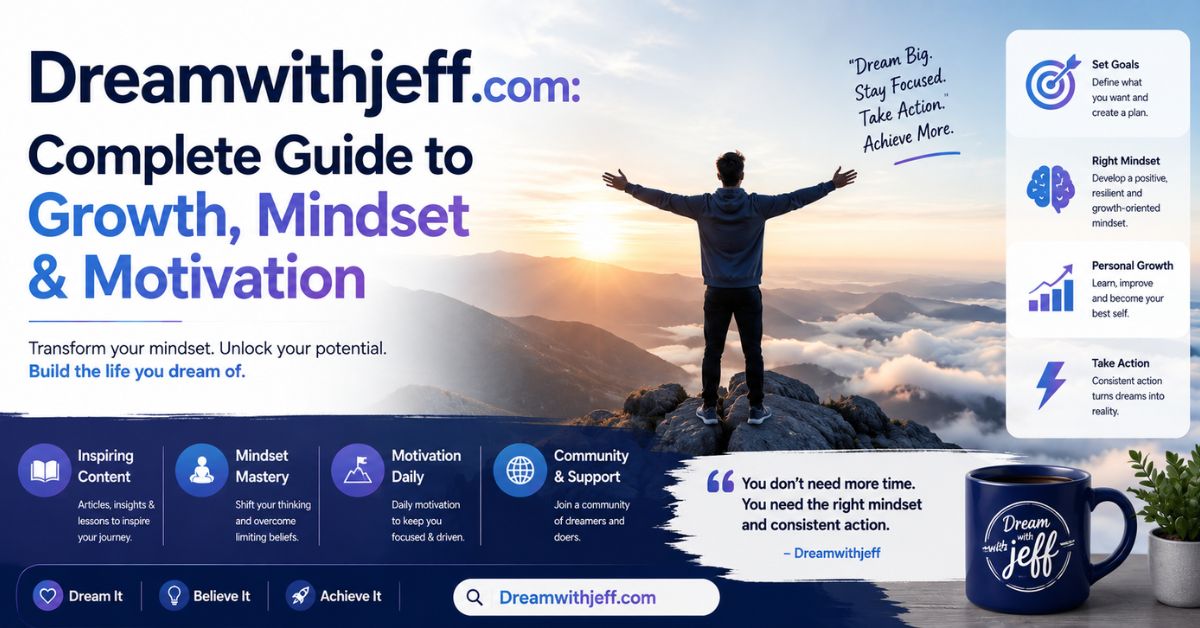
Dreamwithjeff com: Complete Guide to Growth, Mindset & Motivation
Personal growth sounds exciting. Then real life gets in the way. Energy drops. Motivation fades. Old habits creep back in. This guide looks at Dreamwithjeff.com, a personal growth platform built around practical personal development. It covers mindset development, goal setting, habit building, mindfulness, and productivity. By the end, you will understand how Dreamwithjeff.com works and how to use its ideas in your own life.
This article explains what is Dreamwithjeff.com, why it matters, and how it connects to real personal growth strategies. It also shares simple facts, tables, and easy tips. No fluff. Just clear, useful information in easy English.
What Is Dreamwithjeff com?
Dreamwithjeff.com is a personal growth platform focused on real change, not empty hype. It centers on self-improvement, self-development, and steady behavior change. The platform avoids extreme advice like “wake up at 4 a.m. or fail.” Instead, it teaches small steps that fit normal life.
The site covers topics like habit building, healthy habits, mindfulness, self-awareness, and goal achievement. It also touches on energy management and burnout prevention. This mix makes it useful for many types of readers, from students to busy professionals seeking life improvement.
What Is the Purpose of Dreamwithjeff.com?
The purpose of Dreamwithjeff.com is simple. It wants to help people build positive mindset habits that last. Many people know what to do. They struggle with how to actually do it. This platform focuses on that gap between knowledge and action.
Dreamwithjeff.com personal growth content leans on productivity strategies that feel doable, not overwhelming. It does not promise instant transformation. It promises small, steady steps that add up over time. This approach fits people who feel tired of unrealistic self-improvement advice.
Why Is Personal Growth So Difficult?
Growth feels hard because most advice ignores real life. People get busy. Energy runs low. Old behavioral patterns return without warning. This section breaks down three common blockers people face on their personal growth journey.
Understanding these blockers is the first step toward real change. Once you see why growth feels hard, you can build smarter systems instead of blaming yourself. That mindset shift matters more than most people realize.
Why Motivation Alone Is Not Enough
Motivation feels powerful at first. It fades fast, though. One day you feel unstoppable. The next day, even small tasks feel heavy. This is normal. Motivation works like weather. It changes without warning.
Dreamwithjeff.com motivation advice focuses on systems instead. A system might be a short daily walk instead of a two-hour workout plan. Systems keep working even when motivation disappears. This is why success habits depend more on routine than on feeling inspired.
How Information Overload Creates Inaction
Many people consume endless content. Podcasts. Videos. Books. Courses. This feels productive. Yet nothing changes in real life. This pattern is sometimes called productive procrastination.
Dreamwithjeff.com self-improvement content pushes action over endless learning. Reading one useful idea and applying it beats reading twenty books and applying nothing. Practical self-improvement means doing, not just watching or scrolling.
Why Perfectionism Can Slow Progress
Perfectionism often hides behind responsible-sounding words. “I will start when I am ready.” “I missed one day, so I failed.” This thinking creates all-or-nothing pressure. One missed day suddenly feels like total failure.
Real growth looks messy. It includes missed days, slow weeks, and small setbacks. People who succeed are not perfect. They simply return to their routine faster after a slip. This mindset supports long-term mental resilience.
The Personal Growth Philosophy Behind Dreamwithjeff.com
The core philosophy behind Dreamwithjeff.com rests on three ideas. Small steps matter more than big bursts. Systems matter more than mood. Self-knowledge leads to smarter choices. Together, these ideas shape a realistic growth mindset.
This philosophy fits people tired of extreme routines. It supports continuous improvement instead of dramatic overnight change. Readers slowly build a stronger, more consistent version of themselves through daily action.
Progress Over Perfection
Small actions feel unimportant in the moment. Over time, they build real results. Reading ten pages daily adds up to thousands of pages in a year. Waiting for the “right time” often means waiting forever.
This idea supports a simple mindset shift. Progress does not need to be big to count. It only needs to be consistent. That consistency is the real engine behind lasting personal transformation.
See Also: GoralBlue Com: A Reader’s Guide to Evaluating the Platform, Content & Features
Systems Over Motivation
A system is a repeatable structure that removes guesswork. It might include a fixed work block, a prepared workspace, or a simple checklist. Systems reduce daily decision fatigue.
Dreamwithjeff.com productivity advice leans heavily on this idea. If workout clothes sit ready by the door, exercise becomes easier to start. Systems work with human nature instead of fighting it. This is one of the smartest productivity strategies available.
Self-Awareness and Better Decision-Making
Many people copy routines that do not fit them. A tired worker forces an aggressive new schedule. A night owl tries an extreme early morning routine. These mismatches usually fail fast.
Self-awareness helps people build routines that fit their real energy and personality. Understanding your own patterns supports smarter personal effectiveness. This is where self-discovery becomes a practical tool, not just a nice idea.
Dreamwithjeff.com and Goal Setting
Goals give direction. Without structure, though, goals often fail. This section explains how Dreamwithjeff.com goals advice connects big dreams to small daily actions. The gap between wanting something and reaching it usually comes down to planning.
Strong goal planning turns vague wishes into clear steps. This section also shows the difference between goals that inspire and goals that actually get done. Both matter, but only one leads to results.
Why Goals Need Practical Systems
A goal answers “what do I want.” A system answers “how will I get there.” Most people focus only on the first question. That is why so many goals quietly fade by February.
Actionable goals need daily support. A goal to “get healthy” means little without daily steps like walking or better sleep. Goal achievement depends on turning big dreams into small, repeatable actions.
Breaking Big Goals Into Small Actions
Large goals like “write a book” or “build a business” feel intimidating. The brain often reacts to this size by avoiding action completely. Breaking the goal down removes that fear.
Instead of “get healthier,” a person can focus on drinking more water, walking daily, and sleeping on a set schedule. These small, measurable progress points feel doable. Over time, they lead to the big goal anyway.
| Big Goal | Small Daily Action |
|---|---|
| Get healthier | Walk 20 minutes daily |
| Save money | Save $10 a day |
| Write a book | Write 200 words daily |
| Improve focus | One 25-minute deep work block |
Process Goals vs. Outcome Goals
An outcome goal points at the final result, like losing 20 pounds. A process goal points at the repeated action, like exercising four times a week. Process goals build daily structure.
Focusing on the process usually leads to the outcome anyway. This matters because outcomes take time. Processes give people something to control today. This mix supports realistic short-term goals and long-term goals together.
Habit Building and Daily Improvement
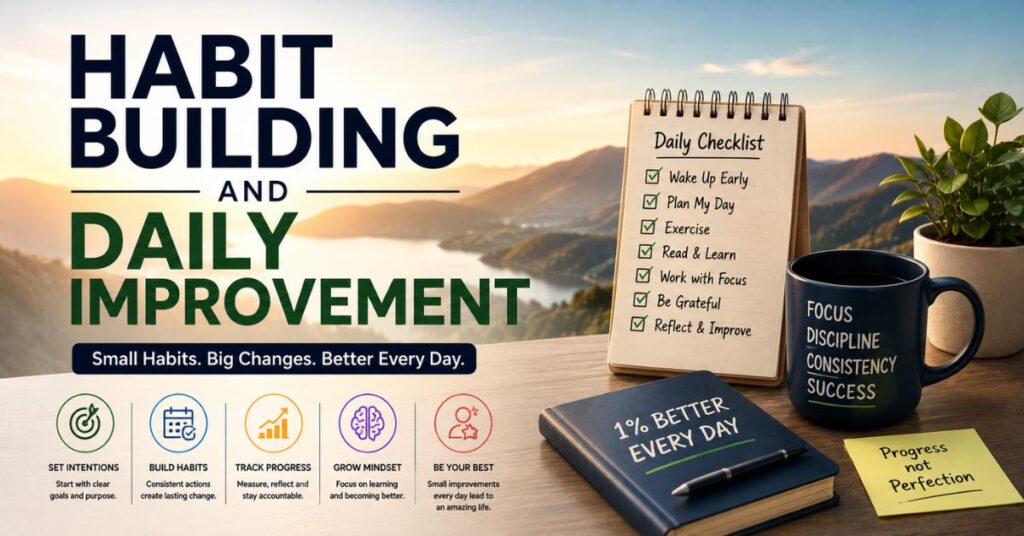
Habit building sits at the center of most lasting change. Small repeated actions shape identity over time. This section explains how habits form and why consistency beats intensity almost every time.
Healthy habits rarely form through willpower alone. They form through smart structure and repetition. Understanding habit formation helps readers build routines that stick instead of routines that collapse after a week.
How Habits Shape Identity
Every repeated action sends a message to the brain. It says, “this is who I am.” Someone who reads daily slowly becomes “a reader.” Someone who exercises regularly becomes “a person who trains.”
This is the basis of identity-based habits. Change becomes easier when it connects to identity instead of just willpower. This shift supports true behavior change, not just short bursts of effort.
The Four Stages of Habit Formation
Habits usually form through four connected stages. Each stage plays a specific role in turning a new action into an automatic behavior. Skipping a stage often causes habits to fail early.
Below is a short breakdown of each stage. Understanding these stages supports smarter habit tracking and stronger daily routines.
Recognizing the Cue
Every habit starts with a trigger. This could be stress, boredom, or a certain time of day. Noticing the cue gives a person more control over their reaction.
For example, boredom often triggers phone scrolling. Stress often triggers snacking. Naming the trigger is the first step toward change.
Simplifying the Action
Habits often fail because the action feels too hard to start. Reducing friction makes a big difference. Keeping a book by the bed or preparing gym clothes early removes small barriers.
Simple actions repeat more easily. This idea supports habit stacking, where a new habit attaches to an existing routine, like stretching right after brushing teeth.
Building Repetition
Repetition matters more than intensity. A short fifteen-minute daily habit often beats a long, tiring weekend session. Small, steady reps build strong consistent behavior over time.
This repetition slowly turns effortful action into automatic behavior. That shift is what makes habits feel easy eventually, instead of forced.
Tracking Progress
Tracking builds awareness and motivation. A simple checkmark, journal entry, or app log reinforces the habit. People naturally want to protect a growing streak once it starts.
This step supports long-term habit tracking and keeps daily improvement visible. Seeing progress, even in small form, keeps motivation alive longer.
Mindfulness and Emotional Awareness
Mindfulness plays a bigger role in personal growth than many people expect. This section explains how mindful habits improve focus, emotional balance, and daily decision-making. Dreamwithjeff.com mindfulness content treats this as a practical tool, not a vague idea.
Emotional awareness helps people respond instead of react. This small shift supports better choices across work, relationships, and personal goals. It also supports stronger emotional regulation during stressful moments.
Why People Often Live Reactively
Modern life creates constant noise. Notifications, messages, and deadlines pull attention in many directions. Many people spend entire days simply reacting to outside pressure.
This reactive pattern creates mental fatigue. It also weakens mental clarity over time. Breaking this cycle requires intentional pauses throughout the day.
How Mindfulness Improves Focus
Mindfulness is not only meditation. It includes awareness, presence, and intentional attention. Research links mindful habits to lower stress and better emotional balance.
This practice also supports present-moment awareness, which helps people notice thoughts before reacting to them. That short pause often prevents impulsive decisions and emotional overwhelm.
Simple Mindfulness Practices for Daily Life
Mindfulness does not need to be complicated. Small daily actions can create a noticeable shift in focus and mood.
| Mindfulness Habit | Benefit |
|---|---|
| Deep breathing for two minutes | Lowers stress response |
| Morning reflection | Builds mental clarity |
| Walking without a phone | Improves present-moment awareness |
| Journaling emotions | Builds emotional awareness |
| Short breaks between tasks | Resets mental energy |
Self-Discovery and Long-Term Personal Growth
Self-discovery supports every other part of personal growth. Without understanding your own patterns, change becomes guesswork. This section connects self-awareness to real, lasting results.
This part of the personal development journey often gets skipped. Yet it forms the foundation for smarter goals, stronger habits, and better emotional control.
Why Self-Awareness Matters
Many behaviors happen automatically. Emotional eating, doomscrolling, or negative self-talk often repeat without notice. Self-awareness brings these patterns into view.
Once a pattern becomes visible, change becomes possible. This is why self-reflection plays such an important role in any real self-improvement journey.
How Identity Shapes Behavior
People often act in ways that match their self-image. Someone who believes “I am lazy” may unconsciously protect that identity through inaction. Identity can shift, though, through repeated proof.
Saving money regularly builds financial discipline. Writing daily builds confidence as a writer. These small actions slowly reshape self-belief and support a stronger adaptive mindset.
See Also: Young18gye Explained: Meaning, Uses, Safety & Online Presence
Questions That Reveal Personal Patterns
Simple questions often reveal powerful insight. What drains my energy fastest? When do I procrastinate the most? Which environments help me focus? These questions support deeper self-reflection and stronger personal insight over time.
Productivity, Focus, and Distraction Management
Productivity and focus improvement go hand in hand. This section explains why distractions damage performance and how simple strategies restore attention. Dreamwithjeff.com focus advice centers on removing friction, not forcing willpower.
Modern distractions attack attention constantly. Learning to manage them supports stronger deep work and better daily output.
Why Multitasking Reduces Performance
Multitasking feels productive. Research shows it usually is not. The brain does not truly handle two tasks at once. It quickly switches between them instead.
This switching creates mental fatigue, more mistakes, and slower thinking. Focused work on a single task almost always produces better results than juggling many tasks at once.
How to Reduce Environmental Distractions
Environment shapes behavior more than most people realize. Removing unnecessary tabs, silencing notifications, and creating a clean workspace all support stronger focus.
Small changes to your surroundings often create large shifts in attention management. This supports smarter distraction management without relying only on willpower.
Using Time Blocking for Better Focus
Time blocking gives structure to the day. It assigns specific time slots to specific tasks, reducing decision fatigue and mental clutter.
| Time | Activity |
|---|---|
| 8:00 AM – 9:00 AM | Deep work |
| 9:00 AM – 9:15 AM | Break |
| 9:15 AM – 10:00 AM | Emails |
| 10:00 AM – 11:30 AM | Project work |
This structure supports stronger productivity systems and clearer prioritization throughout the day.
Protecting Attention in a Digital World
Constant entertainment trains the brain to expect nonstop stimulation. This makes deep focus feel uncomfortable by comparison. Reducing exposure to digital distractions slowly restores concentration.
Over time, this rebuilds the brain’s ability to sit with a single task longer. That shift supports stronger concentration techniques and better long-term focus.
Burnout Prevention and Sustainable Productivity
Burnout prevention matters as much as productivity itself. Working hard without rest eventually damages performance and health. This section explains how Dreamwithjeff.com frames sustainable effort.
Real success depends on balance, not constant pressure. This section supports smarter, longer-lasting sustainable productivity habits.
Why Burnout Happens
Burnout is more than tiredness. It includes emotional exhaustion, mental fog, irritability, and reduced performance. Many ambitious people ignore early warning signs.
This pattern often leads to chronic stress and long-term damage to focus, creativity, and health. Recognizing early symptoms supports faster recovery and prevention.
The Problem With Hustle Culture
Hustle culture glorifies constant effort. Messages like “grind nonstop” sound motivating at first. Over time, though, this mindset often backfires.
The brain needs rest to function well. Ignoring this need damages decision-making and increases mental exhaustion. Sustainable growth requires rest and recovery, not endless pressure.
Energy Management vs. Time Management
Time matters, but energy matters more. Two hours of focused work often beats eight exhausted hours. Protecting sleep, mental recovery, and emotional bandwidth supports stronger long-term output.
High performers usually cycle between effort and recovery. This strategic balance supports better energy management and long-term work-life balance.
Financial Growth and Goal Planning
Financial stability connects closely to personal growth. Money stress affects sleep, focus, and decision-making. This section explains how Dreamwithjeff.com links financial habits to overall personal goals.
Clear financial planning reduces daily stress and supports stronger long-term stability. This section shows simple ways to build that clarity.
How Financial Stress Affects Personal Well-Being
Financial pressure spreads into many areas of life. It affects sleep quality, focus, relationships, and long-term planning ability. This overlap makes financial health part of overall personal growth.
Reducing financial stress often improves mental clarity and emotional stability across other areas of life as well.
See Also: Is Brumeblog.com Safe? Honest Review, Security Check & Verdict
Creating Clear Financial Goals
Vague goals produce vague results. “Save money” means little without a clear number attached.
| Weak Goal | Better Goal |
|---|---|
| Save money | Save $200 monthly |
| Spend less | Track weekly spending |
| Build savings | Save 10% of income automatically |
Specific goals support stronger goal tracking and clearer daily action.
Building Sustainable Financial Habits
Small financial habits build stability over time. Automatic transfers, weekly spending reviews, and simple budgeting all support long-term financial health.
These small, repeated actions reflect the same habit formation principles used throughout this guide. Consistency wins over intensity here as well.
Dreamwithjeff.com vs. Traditional Productivity Platforms
Not all growth platforms share the same approach. This section compares Dreamwithjeff.com to more traditional, intensity-driven productivity advice. Understanding the difference helps readers choose an approach that fits their life.
Traditional systems often prioritize output above all else. Dreamwithjeff.com takes a steadier, more balanced route toward the same destination.
Traditional Productivity Approaches
Many traditional platforms push aggressive schedules and constant optimization. This can work short term. Over time, it often leads to exhaustion and burnout.
This intensity-first approach ignores rest and emotional health. It focuses almost entirely on immediate output.
Dreamwithjeff.com’s Focus on Sustainable Progress
Dreamwithjeff.com takes a different path. Instead of “push harder,” the message becomes “build smarter systems.” This shift supports steady, sustainable productivity instead of short bursts followed by burnout.
This approach fits people seeking lifestyle improvement without sacrificing long-term health and balance.
Dreamwithjeff.com Comparison Table
| Feature | Dreamwithjeff.com | Traditional Platforms |
|---|---|---|
| Productivity Style | Sustainable | Aggressive |
| Mental Wellness | Strong focus | Often ignored |
| Habit Building | Gradual | Intense |
| Burnout Prevention | Prioritized | Rare |
| Simplicity | Encouraged | Sometimes complicated |
| Focus | Long-term consistency | Immediate output |
How to Use Dreamwithjeff.com Effectively
Understanding a philosophy is one thing. Applying it daily is another. This section explains practical ways to use Dreamwithjeff.com ideas in everyday life.
Small, steady changes create the strongest long-term results. This section breaks that process into four simple steps.
Start With Small Changes
Most people start too aggressively and quit early. Starting smaller than feels necessary builds early wins and confidence. Confidence then supports stronger long-term consistency.
Focus on One Area at a Time
Trying to fix everything at once overwhelms the brain. Choosing one area first, like sleep or focus, allows that habit to stabilize before adding another.
Track Your Progress
Visible tracking increases accountability. Journals, habit trackers, and simple calendars all support stronger habit tracking and clearer daily motivation.
Build Goals Around Real Life
Perfect systems often collapse under real pressure. Flexible systems survive busy weeks, low-energy days, and unexpected events. This flexibility supports long-term success far more than rigid perfection.
The Psychology Behind Long-Term Change
Long-term change depends on psychology as much as strategy. This section explains why many people quit early and how small wins build lasting momentum.
Understanding this psychology supports stronger patience and mental resilience throughout any growth journey.
Why People Quit Before Seeing Results
Early progress often feels invisible. This discourages many people before real change appears. Growth compounds quietly, much like water slowly heating before it boils.
Effort builds in the background before visible results appear. Patience during this stage matters enormously.
How Small Wins Build Momentum
Small victories create real psychological rewards. Completing small tasks builds confidence and reinforces identity. This naturally increases motivation over time.
Momentum almost always starts small before growing into something larger and more consistent.
How Environment Shapes Behavior
Willpower matters less than most people think. Environment often determines behavior automatically. Junk food nearby increases unhealthy eating. Phones by the bed increase scrolling.
Designing a smarter environment reduces the need for constant willpower and supports easier behavior change.
Common Personal Growth Mistakes to Avoid
Even motivated people make repeated mistakes. This section highlights four common errors that slow down personal growth progress.
Avoiding these mistakes often matters more than adding new strategies. Small corrections here create large long-term results.
Consuming Content Without Taking Action
Learning feels productive. Execution creates real results. Reading many books without applying anything changes very little in daily life.
Relying Too Much on Motivation
Motivation fluctuates daily. Systems remain stable. This is why routines consistently outperform emotional intensity over time.
Ignoring Rest and Recovery
Rest supports creativity, memory, and emotional stability. Skipping recovery eventually damages performance and increases mental exhaustion.
Chasing Perfection
Perfectionism delays action. Growth requires experimentation, mistakes, and steady adjustment. Consistent effort beats occasional perfection almost every time.
Who Can Benefit From Dreamwithjeff.com?
Dreamwithjeff.com fits many types of readers. This section breaks down four groups that may benefit most from its practical approach to personal development.
Each group faces different daily challenges, yet the same core principles apply across all of them.
Students
Students often struggle with focus, time management, and consistency. Practical systems reduce overwhelm and support steadier academic performance.
Professionals
Many working professionals face daily exhaustion and constant pressure. Balanced productivity systems help restore energy and long-term work-life balance.
Entrepreneurs and Creatives
Creative work depends on mental clarity and steady focus. Burnout quickly damages creativity, making sustainable routines especially important for this group.
Personal Development Beginners
Some self-help spaces feel intimidating for newcomers. A practical, low-pressure approach feels more accessible for beginners starting their personal growth journey.
Is Dreamwithjeff.com Useful for Personal Growth?
Based on its focus areas, Dreamwithjeff.com appears useful for readers seeking realistic, steady personal development support. Its emphasis on systems, self-awareness, and sustainable routines fits people tired of extreme, unrealistic advice.
That said, readers should always confirm current features, pricing, and details directly on the site itself before making decisions. Third-party guides can become outdated, so checking firsthand ensures accurate, up-to-date information.
Safety and Trust Considerations When Visiting Dreamwithjeff.com
Online safety matters when exploring any personal growth platform. Readers should check for clear ownership information, a visible privacy policy, and secure checkout methods before sharing personal or payment details.
It also helps to look for independent reviews beyond the platform’s own claims. Readers should stay cautious of any site promising guaranteed transformation, since no legitimate program can promise fixed results for every individual.
Key Lessons You Can Apply From Dreamwithjeff.com
The ideas behind Dreamwithjeff.com apply well beyond the platform itself. This section highlights four lessons readers can use immediately in daily life.
These lessons connect directly to the core themes covered throughout this guide, from habit building to focus improvement.
Reduce Friction
Making good habits easier increases follow-through. Preparing meals early, keeping water nearby, and removing distracting apps all reduce daily friction.
Make Progress Visible
Tracking habits, work sessions, and personal goals increases consistency. Visible progress keeps motivation active over time.
Create Low-Energy Backup Routines
Some days feel harder than others. Having a small backup habit, like reading one page or walking five minutes, maintains momentum during difficult stretches.
Protect Your Attention
Limiting notifications, reducing scrolling, and avoiding constant multitasking all support stronger focus. Protecting attention improves nearly every other area of daily performance.
Frequently Asked Questions
What is Dreamwithjeff.com mainly about?
Dreamwithjeff.com focuses on practical personal growth strategies, including habit building, productivity, mindfulness, and focus improvement.
Is Dreamwithjeff.com beginner-friendly?
Yes. The platform emphasizes simple systems instead of overwhelming complexity, making it approachable for beginners.
Does Dreamwithjeff.com focus only on motivation?
No. The platform emphasizes systems, routines, and behavior change far more than short-term motivation.
Can Dreamwithjeff.com help improve focus?
Yes. Many concepts connect directly to focus improvement, distraction management, and sustainable productivity.
Does Dreamwithjeff.com discuss habit building?
Yes. Habit formation and consistency sit at the center of the platform’s overall philosophy.
Is mindfulness part of Dreamwithjeff.com?
Yes. Mindfulness supports emotional regulation, better decision-making, and stronger daily focus throughout the platform’s content.
Who benefits most from Dreamwithjeff.com?
Students, professionals, entrepreneurs, creatives, and beginners interested in realistic personal growth strategies may benefit most.
Final Thoughts
Real personal growth rarely happens through dramatic overnight change. It happens through small, steady choices repeated over time. This includes better daily habits, stronger self-awareness, and smarter energy management.
Dreamwithjeff.com stands out by focusing on sustainable systems instead of unrealistic perfection. The biggest lesson from this guide stays simple. Small, consistent actions reshape lives faster than rare bursts of extreme effort. That approach supports real, lasting long-term growth.

Ryan Mitchell is a writer and language enthusiast at MeaningZen. He creates simple guides on slang, word meanings, grammar, and modern internet language. His goal is to make confusing words and phrases easy to understand.