
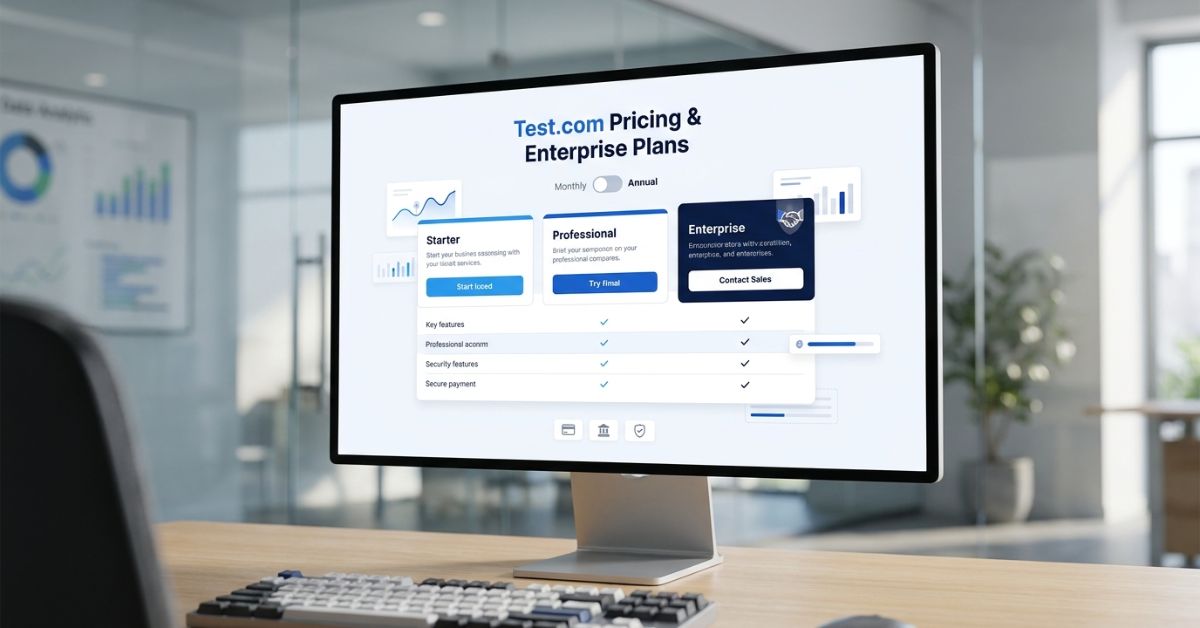
Test com Pricing & Enterprise Plans 2026: Complete Cost Breakdown
You want a clear answer. How much does Test com Pricing & Enterprise Plans really cost at the Enterprise level? This guide gives you real numbers. It also explains what those numbers actually include.
Test.com is now part of the Gauge Online platform. It is built as an enterprise testing platform for serious certification programs. This article breaks down every cost. It covers the Test.com Professional plan, the Test.com Enterprise plan, hidden fees, and what you get for your money. We will also compare Test.com alternatives and help you decide if the Test.com Enterprise cost is worth paying in 2026.
What Is Test com Pricing & Enterprise Plans?
Test.com is an online testing platform. It started as a simple testing brand. Over time, it grew into Gauge Online, a full certification management software system. This platform is not a basic quiz app. It is built for real certification programs, credentialing programs, and high-stakes assessments.
Gauge says it has supported certification work for more than 25 years. It claims over 15 million exam attempts delivered. More than 1,000 certification bodies use the platform today. It supports 26 languages. This makes it a true enterprise testing tool. It fits training organizations, government organizations, and trade associations that need strong exam management.
Who Owns Test.com?
The company behind the platform is Test.com, Inc. This company runs Gauge Online as its main product. The website footer confirms this ownership. So when you see “Gauge,” you are really looking at the modern face of Test.com.
There is one thing to watch out for. The plain domain, test.com, is very old. WHOIS records show it was registered in 1997. Its owner information is hidden through a privacy service. Some domain marketplaces even list test.com as a premium domain for sale. This has nothing to do with the software. If you are checking Test.com pricing, make sure you are on the real Gauge product pages. Do not confuse domain value with software cost.
Test.com Pricing at a Glance
Let’s start with the numbers. Test.com pricing plans come in two main types. There is Professional, and there is Enterprise. Each plan has a different starting price, a different hosting fee, and a different setup fee.
Gauge is more open about its published pricing than most competitors. Many enterprise testing platform vendors hide all numbers behind a sales call. Gauge instead gives you a starting point. Here is the basic breakdown.
| Plan | Software Cost | Hosting Fee | Setup Fee | Best For |
| Professional | $750 per year | $250 per year | $500 one-time setup cost | Growing certification programs |
| Enterprise | $10,000 per year | $1,000 annual hosting | $2,000 one-time setup fee | More than 10,000 tests per year |
Professional Plan Pricing
The Test.com Professional plan starts at $750 per year. This is the software cost only. Add $250 for hosting cost, and your annual subscription reaches about $1,000 per year. There is also a $500 setup cost in your first year.
Gauge splits Professional into eight usage tiers. This lets smaller certification programs grow step by step. You do not need to jump straight to Enterprise pricing. This plan works well for training organizations that are still building their annual exam volume.
Enterprise Plan Pricing
The Test.com Enterprise plan starts at $10,000 per year. This is a recurring cost for the software alone. Add $1,000 annual hosting, and the recurring cost reaches $11,000 per year. Then add the $2,000 one-time setup fee.
That brings your first-year starting cost to about $13,000. This is the true starting pricing estimate for a new Enterprise agreement. Remember, this is only a starting number. Your final customized quote depends on your real annual exam volume.
Setup Fees and Additional Costs
Every plan has a one-time setup cost. Professional charges $500. Enterprise charges $2,000. This fee covers your first implementation and onboarding.
These fees are only the starting point, though. Additional charges can appear later. This includes overage charges, proctoring costs, and integration development. We will explain each of these costs later in this article.
How Does Test.com Enterprise Pricing Work?
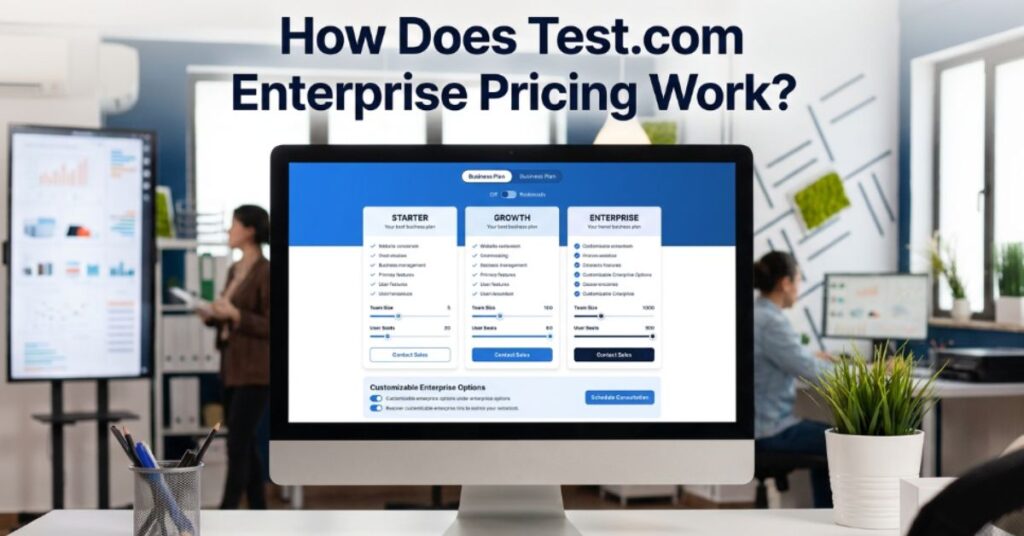
Test.com Enterprise pricing is not a flat monthly fee. It uses volume-based pricing instead. This means your billing model depends on how many tests you run each year.
This model makes sense for large organizations. A group running 11,000 tests has very different needs than one running 100,000 tests. Volume pricing lets both groups pay a fair rate. It also means your final price can change as your program grows.
Test Volume and Per-Test Costs
Gauge states that Enterprise pricing starts around $3 per test. This is the base per-test pricing rate. As your annual test volume grows, this rate drops.
The company claims its biggest customers pay below $1 per test. That is a big saving at scale. Still, treat this as a pricing estimate, not a guaranteed number. Always request a customized quote based on your own projected exam volume.
What Counts as a Test?
This question matters more than most buyers realize. Does a practice test count? Does a retake count the same as a first attempt? Gauge separates candidates, exam attempts, test retakes, and lessons in its system.
A candidate is one person. That person may take several exam attempts. Each retake may or may not count toward your usage limits. Ask this question directly before you sign any enterprise agreement. It changes your real cost per exam attempt.
What Happens If You Exceed Your Test Volume?
Every plan has a volume threshold. Going past this threshold triggers overage billing. This is sometimes called overage pricing.
Excess usage can happen during peak testing periods. Many certification bodies see seasonal demand around specific months. If your organization expects simultaneous exam sessions during busy periods, ask how overage charges are calculated in advance. This protects your recurring annual budget from surprise bills.
See Also: 14S+ EO Instant Appear HighSoftware99 Com Review 2026: Is It Legit & Safe?
Candidate Costs vs. Exam Costs
There is an important difference between cost per candidate and cost per exam attempt. One candidate might take one test. Another might need three retakes before passing.
This distinction affects your total cost of ownership. A fully loaded certification cost includes every attempt, not just the first one. When you build your first-year budget, factor in your average attempts per candidate. This gives you a more honest pricing estimate.
What Does Test.com Enterprise Include?
The Test.com Enterprise cost covers more than basic testing. It includes a full set of tools built for enterprise testing. These tools support secure exam delivery, credential management, and deep system integrations.
This section breaks down what your money buys. Each feature below plays a role in why organizations choose Gauge over a smaller online exam platform.
Online Testing and Assessment Tools
Gauge supports six question types. These include multiple choice, matching, sorting, true or false, text answers, and rating scales. Each exam can use scoring rules, passing scores, time limits, and attempt limits.
Large programs can reuse a shared question bank across many exams. Gauge also supports randomized questions. This adds exam security and reduces cheating. This is core advanced online testing functionality for any serious assessment platform.
Certification and Digital Badging
Testing is only step one. Certification and digital badging finish the process. Gauge lets you build learning paths with clear prerequisites.
Once a candidate meets the rules, the system issues a certificate automatically. Certification renewal can also be tracked over time. Digital badges include QR code verification, which supports credential verification for employers or third parties checking a candidate’s record.
Proctoring Options
Online proctoring protects exam integrity. Gauge connects with several outside proctoring providers. These include ProctorU, ProctorFree, HonorLock, and MonitorEDU.
There is also an in-house option called GaugeLive for on-site proctored exams. Remote proctoring matters most for high-stakes assessments, where a candidate’s result affects a real license or job. Keep in mind that proctoring integration is often billed separately from the base platform cost.
API, Webhooks, and SSO
API integration is one of the strongest reasons to choose Gauge. The platform offers full REST API access. It also supports webhooks for real-time data updates.
SSO integration, also called single sign-on, connects your login system directly to Gauge. This supports LMS integration, CRM integration, and connections to HR systems. These developer tools reduce manual work and support real custom integrations across your external systems.
Security and Access Controls
Enterprise security includes IP-based restrictions, custom authentication, and detailed user permissions. Every action inside the system can be tracked.
Gauge keeps audit logs and audit trails for access controls. This data supports later compliance reviews. For regulated industries, this is often the main reason Enterprise pricing makes sense at all.
How Does Test.com Work?

Understanding the testing workflow helps explain why pricing works the way it does. Each step below connects to a real cost or setup decision.
The process moves from planning to delivery to reporting. Knowing each step helps you plan your own implementation timeline and budget.
Choose Your Exam Volume
First, estimate your annual exam volume. This single number drives your entire pricing estimate. Think about your registered users, expected candidates, and likely retakes.
Select Features and Capabilities
Next, decide which tools you actually need. Do you need certification, digital badging, integrated proctoring, or eCommerce? Each added feature can affect your final price.
Build and Configure Assessments
Now you build your exams. Use the built-in question types, or import an existing question bank through bulk CSV import. This step also sets your scoring rules and time limits.
Set Up Security and Integrations
This step covers authentication, SSO integration, and any API integration you need. You also set IP-based restrictions and user permissions here.
Deliver Exams and Review Results
Candidates take their exams online. Proctored exams run through your chosen provider. Afterward, you review results through built-in reporting and analytics.
Issue Certifications and Credentials
Finally, the system issues certificates and digital badges automatically. This finishes the credentialing program cycle for each passing candidate.
Test.com Enterprise Costs Beyond the Base Price
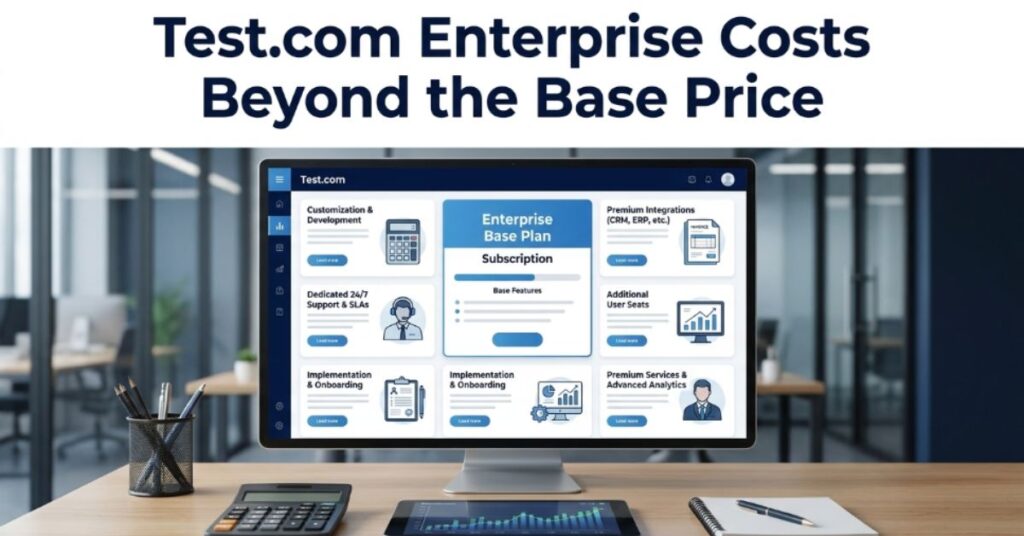
The base Test.com Enterprise cost is not your full bill. Several additional costs sit outside the main software cost. Smart buyers plan for these before signing.
This is where many organizations get surprised. A full total cost of ownership review should always include the items below.
Proctoring Costs
Proctoring integration is not free. Each outside provider charges its own fee. This cost depends on volume and the type of remote proctoring used. Always ask your vendor for separate proctoring costs during your quote process.
Setup and Onboarding
The $2,000 one-time setup fee covers basic onboarding. Larger organizations may need extra setup support or staff training. This can raise your first-year implementation cost above the base number.
Migration and Data Transfer
Moving old data takes work. Data migration may include question bank migration, user records, and past test histories. Some platforms offer bulk migration tools. Others require more manual effort, which raises migration expenses and migration costs.
eCommerce and Other Optional Services
If you plan to sell exams directly to candidates, you may need eCommerce tools. This adds payment processing fees to your recurring platform expenses. Always confirm which optional services sit inside your quote and which cost extra.
See Also: VIPRow.us.com Review 2026: Is VIPRow us com Legit, Safe & Worth Using
Test.com Professional vs. Enterprise: Which Is Better?

Choosing between Test.com Professional plan and Test.com Enterprise plan comes down to size and need. Professional fits smaller, growing programs. Enterprise fits large, complex operations.
Both plans share the same base testing engine. The real difference is depth. Enterprise adds heavier security, deeper integrations, and support for much higher high-volume testing.
Features and Usage Limits
Professional offers eight usage tiers and core testing tools. Enterprise adds certification, proctoring integration, API integration, SSO integration, and full audit trails. The table below shows the general gap.
| Feature | Professional | Enterprise |
| Basic testing tools | Included | Included |
| Certification and badging | Limited | Full support |
| API and webhooks | Not included | Included |
| SSO integration | Not included | Included |
| Audit trails | Limited | Full support |
Support and Scalability
Enterprise customers get more support built around large-scale testing. This matters for certification bodies running thousands of exams each month. Professional support fits smaller teams with simpler needs.
Which Plan Fits Your Organization?
If your annual exam volume stays under 10,000 tests, Professional likely fits better. If you pass that volume threshold, or need deep system integrations, Enterprise becomes the smarter choice. Your real enterprise testing ROI depends on matching the plan to your actual size.
Test.com Security and Privacy
Security sits at the center of any certification exam platform. Gauge builds its Enterprise security around access control, strong authentication, and full tracking of user actions.
Before signing any contract, treat security as a real vendor due diligence step. Marketing claims are a starting point, not proof.
Enterprise Security Controls
Gauge offers IP-based restrictions, custom authentication, and user permissions by group. These security controls support secure testing environment standards needed for high-stakes assessments.
User Access and Authentication
SSO connects your existing identity system directly to Gauge. This supports enterprise authentication across your whole organization. It reduces password fatigue and improves candidate access management.
See Also: Goldplaypot com Review 2026: Is It Legit, Safe, and Worth Visiting?
Data Protection and Compliance
Ask about encryption, backups, data retention rules, and incident response plans. A strong privacy review should cover all of these areas before you trust the platform with real candidate data. Compliance needs vary by industry, so confirm specifics for your sector.
Who Should Use Test.com Enterprise?
Not every organization needs Enterprise pricing. This plan fits groups running real certification programs at scale, not casual internal quizzes.
Below are the clearest use cases where the Test.com Enterprise cost tends to pay off.
Certification and Credentialing Organizations
Groups running official credentialing programs benefit most. These include professional certification software users needing automated certificate and digital badge delivery.
Large Training and Assessment Programs
Training organizations running high-volume testing across many locations need strong exam administration tools. Enterprise fits this scale well.
Businesses With Complex Testing Needs
Companies needing LMS integration, CRM integration, or custom HR systems connections often need the deeper API integration that only Enterprise offers.
Who Should Avoid Test.com Enterprise?
Some organizations simply do not need this level of enterprise software pricing. Paying for Enterprise features you never use wastes budget.
Small Teams With Simple Quiz Needs
A small business running a few internal quizzes each year has little reason to pay Enterprise rates. A simpler online assessment software tool likely fits better.
Organizations With Limited Testing Volume
If your annual test volume sits far below 10,000 tests, Professional or a smaller competitor probably makes more financial sense.
Test.com Pros and Cons
Every enterprise testing platform has trade-offs. Gauge is no different. Below is an honest look at both sides.
Pros of Test.com
Gauge offers real pricing transparency compared to most competitors. It supports full certification management, strong API integration, and detailed audit trails. Its volume-based pricing model scales fairly as your program grows, and its REST API plus webhooks support serious custom integrations.
Cons of Test.com
The full Test.com Enterprise cost is hard to predict from the website alone. Proctoring costs often sit outside the base price. The system also has a real learning curve, and it may be overkill for organizations with only basic testing needs.
Is Test.com Legit and Worth the Cost?
Yes, the evidence points to a legitimate business. Test.com, Inc. is named clearly as the company behind Gauge Online. The platform publishes real pricing, security details, and a long operating history.
As one piece of customer feedback published by Gauge itself puts it, the system becomes far easier once you learn where things are. This matches what most enterprise software pricing reviews find. The real question is not legitimacy. It is whether your annual exam volume and feature needs justify the Enterprise plan cost.
Test.com Alternatives
Gauge is not the only certification platform on the market. Some organizations need a simpler or cheaper tool instead. Below are three common Test.com alternatives worth comparing.
ClassMarker
ClassMarker offers simpler online testing platform tools without deep certification management. It usually costs less, which fits smaller testing platform procurement budgets. It lacks the deeper credential management tools that Gauge offers.
TestRail
TestRail is often confused with Gauge, but it serves a different purpose. TestRail focuses on software quality testing, not certification exams for outside candidates. It is not a real substitute for a certification exam platform.
Learning Management Systems
General LMS tools handle courses and basic quizzes well. They usually lack strong exam security, proctoring integration, and full credential management. Gauge itself argues that an LMS manages learning content, while it manages secure exam delivery and certification workflows.
Is the Test.com Enterprise Plan Worth It?
This depends almost entirely on your annual exam volume and your need for integrations. A fully loaded certification cost review should guide your final decision, not just the starting price alone.
When the Enterprise Cost Makes Sense
If you run more than 10,000 tests per year, the math often works in your favor. Saving staff time through automated certification and strong system integrations can offset the higher recurring cost.
When a Lower-Cost Option May Be Better
If your projected exam volume stays small, or you only need basic testing, a cheaper tool avoids paying for features you will never use.
Questions to Ask Before Buying Test.com Enterprise
Before signing any enterprise agreement, ask clear questions. This protects your first-year budget and avoids future surprises.
What Test Volume Is Included?
Confirm exactly how many exam attempts your starting price covers each year.
What Happens When We Exceed the Volume?
Ask how overage pricing is calculated, and whether rates increase or simply add on top of your base fee.
Which Features Are Included in the Quote?
Confirm whether proctoring integration, API access, and eCommerce tools are part of your customized quote or billed separately.
What Setup and Migration Services Are Included?
Ask what your setup fee actually covers, and whether data migration needs extra payment.
What Is the Total First-Year Cost?
Add your software cost, hosting cost, setup cost, and any known additional costs together. This gives you your real first-year starting cost, not just the advertised number.
FAQ’s
How much does Test.com Enterprise cost?
The Test.com Enterprise plan starts at $10,000 per year, plus $1,000 annual hosting and a $2,000 one-time setup fee. This brings the first-year starting cost to about $13,000.
How much does Test.com cost per test?
Gauge states its volume pricing starts around $3 per test. High-volume customers may pay below $1 per test, based on their customized quote.
Is Test.com pricing based on users or tests?
Test.com pricing is based mainly on annual test volume, not simply on the number of registered users.
Does Test.com charge a setup fee?
Yes. Professional charges a $500 setup fee. Enterprise charges a $2,000 one-time setup fee.
Is proctoring included in Test.com Enterprise?
Proctoring integration is available, but proctoring costs are usually billed separately from the base software cost.
Does Test.com support SSO and API integrations?
Yes. Enterprise includes full REST API access, webhooks, and SSO integration for connecting outside systems.
Can existing exam data be migrated to Test.com?
Yes. Gauge supports data migration, including bulk CSV import for question banks and user records.
Is Test.com the same as Gauge Online?
Yes. Gauge Online is the current platform name for the testing and certification software built by Test.com, Inc.
Final Verdict
The Test.com Enterprise cost starts at $10,000 per year, plus $1,000 annual hosting and a $2,000 one-time setup fee. That brings your first-year starting cost close to $13,000, with per-test pricing starting around $3 and dropping with volume.
This platform fits organizations running real certification programs at real scale. It is not built for small, casual quiz needs. Before you sign anything, request a customized quote based on your true annual exam volume. That number, not the advertised starting price, should guide your final decision on Test.com pricing enterprise plans.

Ryan Mitchell is a writer and language enthusiast at MeaningZen. He creates simple guides on slang, word meanings, grammar, and modern internet language. His goal is to make confusing words and phrases easy to understand.